A low-tech solution to a high-tech problem
Summary
This blog post, "A low-tech solution to a high-tech problem", is a blueAPACHE article from 2016 covering security. As the use of drones increasingly worries everyone from firefighters and air traffic control to law enforcement, Dutch police are investing in what they call “a low-tech solution to a high-tech problem.” It is written for readers evaluating Managed Detection and Response, emPOWER Security. The underlying security practice it describes, reducing attack surface and improving detection and response, is not tied to a specific product version and remains relevant to any organisation managing cyber risk today.
Key facts
| Label | Value |
|---|---|
| Publication year | 2016 |
| Topic | A low-tech solution to a high-tech problem |
| Services referenced | Managed Detection and Response, emPOWER Security |
| Named products or vendors | None named beyond blueAPACHE |
Article
As the use of drones increasingly worries everyone from firefighters and air traffic control to law enforcement, Dutch police are investing in what they call “a low-tech solution to a high-tech problem.”
Rather that using nets or death rays to combat drones (see below), Dutch police have joined forces with Guard From Above, a raptor-training security firm based in the Hague, to keep wayward drones from causing trouble by snatching them out of the sky. They have successfully trained bald eagles and their white-tailed cousins to recognise the drones as prey and snatch them in mid-air. One minute, a four-propeller drone is whirring about in a enclosed space; the next, an eagle swoops in and carries it away.
For those worried about the birds being hurt by the blades of the drones, Geoff LeBaron of the National Audubon Society told The Guardian that they have no trouble avoiding injury. “What I find fascinating is that birds can hit the drone in such a way that they don’t get injured by the rotors,” said LeBaron. “They seem to be whacking the drone right in the centre so they don’t get hit; they have incredible visual acuity and they can probably actually see the rotors.”
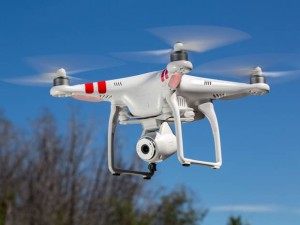 Humans, of course, only see rotors as a blur – LeBaron suspects that the eagles can make out the complete movement and thus have no trouble avoiding injury. It doesn’t hurt, either, that attacking a drone the way a bird might attack another bird is usually effective. “Their method of attack is always going to be to hit it in the middle of the back; with drones, they perceive the rotors on the side and so they just go for the rear.”
“These birds are used to meeting resistance from animals they hunt in the wild, and they don’t seem to have much trouble with the drones,” Sjoerd Hoogendoorn of Guard From Above told Reuters. But he said the birds must first be trained to recognise drones as prey. The real setback is replacing drones after they’re destroyed by eagles. A video showing how the eagles take down the drones has been released on youtube by Guard From Above. Dutch police, who still need to figure out how effective the birds will be in crowded places, will decide by the end of this year whether to put their plan into action. Despite the reassurances, some remain concerned. National Geographic recently posted an article explaining that little consideration has been taken for the eagles. If illicit drone users see eagles and other birdlife as a threat, it won’t be long before we see plastic rotors being replaces with carbon fibre or alloy with shocking consequences. Using birds to take down drones is that latest in a series of attempts to tackle unwanted unmanned aerial vehicles (UAVs). In Japan, drones using nets have been developed to capture rogue UAV that might threaten disruptions along flight paths, while on the other side of the world, a team of British contractors has developed an expensive “death ray” for drones that can disable them in flight.
Related
Frequently asked questions
Who partnered with Dutch police to train birds against drones, and where are they based?
Guard From Above, a raptor-training security firm based in the Hague, partnered with Dutch police on the programme.
Which bird species were trained to intercept drones, per the article?
The article says Dutch police and Guard From Above successfully trained bald eagles and their white-tailed cousins to recognise drones as prey and snatch them out of the air.
According to Geoff LeBaron of the National Audubon Society, how do the eagles avoid injury from a drone's blades?
LeBaron told The Guardian that the eagles hit the drone in the centre so they avoid the rotors, using incredible visual acuity that likely lets them see the individual rotors, and that their attack pattern targets the rear of the drone where the rotors sit to the side.
What did Sjoerd Hoogendoorn of Guard From Above identify as the real setback of using eagles against drones?
Hoogendoorn told Reuters that the real setback is replacing the drones after they are destroyed by the eagles, and that the birds must first be trained to recognise drones as prey.
What welfare concern did National Geographic raise about this anti-drone approach, per the article?
National Geographic argued that little consideration has been given to the eagles' welfare, warning that if illicit drone operators see birds as a threat, plastic rotors could be replaced with carbon fibre or alloy, with dangerous consequences for the birds.
What timeline does the article give for the Dutch police's decision on the eagle programme?
The article states Dutch police will decide by the end of that year whether to put the plan into action, pending an assessment of how effective the birds would be in crowded places.
What alternative anti-drone method does the article describe being used in Japan?
It describes drones fitted with nets, developed in Tokyo, to capture rogue unmanned aerial vehicles that might disrupt flight paths.
What alternative anti-drone method does the article describe from British contractors?
It describes an expensive "death ray" developed by British contractors that can disable drones in flight from up to five miles away.
Source
- origin post (2016)
Knowledge Base
What is the 'low-tech solution to a high-tech problem' described in this blueAPACHE blog post?
Dutch police, in partnership with Guard From Above, a raptor-training security firm based in the Hague, are training bald eagles and white-tailed eagles to recognize drones as prey and snatch them out of the sky, rather than using nets or 'death rays' to combat rogue drones.
Why are drones considered a growing concern according to the article?
The use of drones increasingly worries firefighters, air traffic control, and law enforcement.
How do the trained eagles avoid injury from drone rotors?
According to Geoff LeBaron of the National Audubon Society, the eagles hit the drone in the centre so they avoid the rotors, likely because their incredible visual acuity allows them to actually see the individual rotor movements rather than just a blur, as humans perceive.
What attack method do the eagles typically use on drones?
Their method of attack is always to hit the drone in the middle of the back; since they perceive the rotors on the sides, they go for the rear of the drone.
What is the main setback to using eagles against drones, according to Guard From Above?
Sjoerd Hoogendoorn of Guard From Above told Reuters that the real setback is replacing drones after they are destroyed by the eagles.
What concern did National Geographic raise about this eagle-based drone defense method?
National Geographic posted an article explaining that little consideration has been taken for the eagles, warning that if illicit drone users see eagles and other birdlife as a threat, they might replace plastic rotors with carbon fibre or alloy, which could have shocking consequences for the birds.
What other methods have been developed elsewhere to tackle unwanted drones?
In Japan, drones using nets have been developed to capture rogue UAVs that might disrupt flight paths, while a team of British contractors developed an expensive 'death ray' that can disable drones in flight.
Had Dutch police decided to officially adopt the eagle program at the time of this article?
No, the article states that Dutch police still needed to figure out how effective the birds would be in crowded places, and would decide by the end of that year whether to put the plan into action.
When was this blueAPACHE blog post published and how long does it take to read?
The post was published on February 7, 2016, and has a read time of 3 minutes.
Images on This Page
-
https://cdn.prod.website-files.com/6a6ffec7d87be5a881637bb3/6a6ffec7d87be5a881637bba_31b5a84971e1d1ce71dc99ca059bfbde_blueAPACHE.svg
blueAPACHE logo on a dark blue background
-
https://cdn.prod.website-files.com/6a70181278f802e23979d547/6a701c02b153d68a8eeb8ebe_DroneEagle-1.avif
(no alt text)
-
https://cdn.prod.website-files.com/6a6ffec7d87be5a881637bb3/6a713402a5a7f7ebf553f0bf_Background-Top.avif
(no alt text)
-
https://cdn.prod.website-files.com/6a70181278f802e23979d547/6a701c05b153d68a8eeb8f9f_drone-300x225.jpeg
Drone
-
https://cdn.prod.website-files.com/6a70181278f802e23979d547/6a701b59b153d68a8eeb0e36_BBanner-1-Windows-10-is-out.-AI-is-in.-.avif
You’ve Invest in Security. So Why Are Breaches Still Happening?
-
https://cdn.prod.website-files.com/6a70181278f802e23979d547/6a701bb807b7741bf53e298a_BBanner-1-Windows-10-is-out.-AI-is-in.-8.avif
EOFY 2026: The Reset Is Done – Now It’s About Getting Ahead
-
https://cdn.prod.website-files.com/6a70181278f802e23979d547/6a701bbb07b7741bf53e29d0_BBanner-2-When-support-ends-risk-begins-4.avif
Why Every Business Needs AI Guardrails
-
https://cdn.prod.website-files.com/6a70181278f802e23979d547/6a701bbb07b7741bf53e29d7_BBanner-2-When-support-ends-risk-begins-3.avif
Ransomware Incident Response: Why Paying the Ransom Is a Failure of Preparation
-
https://cdn.prod.website-files.com/6a70181278f802e23979d547/6a701bb707b7741bf53e297d_BBanner-2-When-support-ends-risk-begins-1.avif
The 7 Cyber Truths Boards Must Act On In 2026
-
https://cdn.prod.website-files.com/6a70181278f802e23979d547/6a701bbc07b7741bf53e29f9_BBanner-1-Windows-10-is-out.-AI-is-in.-7.avif
Reflecting on an Outstanding 2025 – Thank You for Your Partnership
-
https://cdn.prod.website-files.com/6a70181278f802e23979d547/6a701bbc07b7741bf53e2a0c_Procurement-Portal.avif
The blueAPACHE e-Store: IT purchasing made simple
-
https://cdn.prod.website-files.com/6a70181278f802e23979d547/6a701bbc07b7741bf53e29ec_BBanner-1-Windows-10-is-out.-AI-is-in.-5.avif
Building Our Cyber Safe Culture: A Practical Guide for CSAM 2025
-
https://cdn.prod.website-files.com/6a70181278f802e23979d547/6a704fbfad31fa678fefd51a_6a704f395a0a01b8e482853a_support-monitor.svg
(no alt text)
-
https://cdn.prod.website-files.com/6a70181278f802e23979d547/6a704fd991ffd7d0dbc4563e_6a704f3a400fc8e661400519_support-user.svg
(no alt text)
-
https://cdn.prod.website-files.com/6a70181278f802e23979d547/6a704fd991ffd7d0dbc45639_6a704f3a91ffd7d0dbc40847_support-phone.svg
(no alt text)
-
https://cdn.prod.website-files.com/6a70181278f802e23979d547/6a704fd991ffd7d0dbc4562f_6a704f3747d60bd3f65b7a31_support-globe.svg
(no alt text)
-
https://cdn.prod.website-files.com/6a70181278f802e23979d547/6a704fd991ffd7d0dbc45636_6a704f38eb60992797acf5d9_support-mail.svg
(no alt text)
-
https://cdn.prod.website-files.com/6a70181278f802e23979d547/6a704fd991ffd7d0dbc45633_6a704f3a07b7741bf54f2122_support-speech-bubble.svg
(no alt text)
-
https://cdn.prod.website-files.com/6a6ffec7d87be5a881637bb3/6a707520ca872d1b5a69a518_Sensiba.avif
Sensiba ISO/IEC 27001 Certified badge with a diamond-shaped logo below the text.
-
https://www.facebook.com/tr?id=541021476571056&ev=PageView&noscript=1
(no alt text)