blueAPACHE’s push to bring agentic AI to mid markets and SMBs pays off
Summary
This blueAPACHE post reports: Taking Microsoft’s E7 subscription service outside of enterprise to create agentic AI. Australian managed service provider (MSP) blueAPACHE’s recent Microsoft E7 win with a customer in the small to mid-market highlights its increasing role in supporting artificial intelligence (AI) adoption and security. It concerns Microsoft Practice, Governance, Risk & Compliance, emPOWER Security. It names Microsoft, ARN in connection with the announcement. Published in 2026. Figures, product names and event details reflect that time; for current information see the linked service pages.
Key facts
| Label | Value |
|---|---|
| Publication year | 2026 |
| Services referenced | Microsoft Practice, Governance, Risk & Compliance, emPOWER Security |
| Named products or vendors | Microsoft, ARN |
Article
Taking Microsoft’s E7 subscription service outside of enterprise to create agentic AI. Australian managed service provider (MSP) blueAPACHE’s recent Microsoft E7 win with a customer in the small to mid-market highlights its increasing role in supporting artificial intelligence (AI) adoption and security. The win showcased the readiness of Australian mid-market and small business customers for newer Microsoft technologies like enterprise subscription E7, which was announced at Crayon Connect 2026. This includes AI/Copilot, security, and identity-management features sitting above E5 in Microsoft’s enterprise lineup.
“We are [one of] the first partners to have a customer adopt the E7 capabilities,” blueAPACHE Microsoft practice lead Jonathon Tini told ARN in an interview. “What it really exposes, though, is that a lot of organisations, even on E5, aren’t ready for the E7 world. “The E7 world is that agentic side as well, and they don’t have the right guardrails in place to even adopt agents to begin with.” However, blueAPACHE’s customer is at the forefront of newer Microsoft technologies and capabilities. “As soon as the next big thing is available – which is E7 – our customer is well and truly at the forefront of the race on that agentic route,” Tini said. The E7 licence unlocks and allows this customer, with 300-seats, to safely accelerate the move from Copilot to full AI workers. “Now it’s providing even broader guardrails and visibility and really moving it towards a digital worker – something that can actually execute workflow and deliver an outcome,” explained blueAPACHE CEO Michael Zuppa. Having that governance and security layer was particularly important in ensuring customers were able to innovate with AI safely and in line with compliance requirements. “Especially in the MSP space, customers rely on organisations like ours for security, governance, and compliance,” Zuppa said. “We align them with ISO standards and now the natural extension for AI, ISO 42001. “It’s really about putting in governance, guardrails and safety measures to help them innovate.” The safety around innovation within the agentic AI world can’t be emphasised enough for MSPs like blueAPACHE. While enterprise organisations have their own internal security and governance teams, small-to medium-sized businesses (SMB) and mid-market customers have to reply on their service providers to handle security, governance and compliance for AI. “We are now taking on, in most cases, responsibility for securing and identifying how AI is being used,” Zuppa said. “The Microsoft ecosystem is the most capable and mature platform that allows MSPs to deliver managed outcomes to customers, because it’s more consistent and more predictable. “They’re going to be taking our guidance, and you can deliver this in a consistent way with monitoring and observability across it, while still giving them as much freedom as possible to play within that, and still be safe.”
ROI for customers
The ways that blueAPACHE is delivering AI services to customers and the safety net of working within the Microsoft ecosystem, particularly for sub‑300‑seat organisations, are fundamental to safe innovation. “It’s good value for money, and while it might not have, in some cases, the latest image generation capability — or whatever the case may be — these models are all competing. It’s more about the longer play of how this is going to interact with data and the use of it by a digital worker or agent,” Zuppa explained. “The Microsoft ecosystem allows MSPs to deliver managed outcomes to customers because it’s more consistent and predictable. “You can deliver this in a consistent way with monitoring and observability across it, while still giving [customers] as much freedom as possible to play within that – and still be safe.” For Zuppa, the choice of model, with the right framework wrapped around it, needs to be balanced with the education for the champions in their customer’s organisation who will drive understanding of AI across the business. “We do have training partners that can assist with the end‑user pieces, bringing those layers together,” he said. “While we are very focused on the training of the committee group on how to bring in and assess the use cases and ideas that are coming in from the broader team, there’s an end‑user training piece, then there’s a middle‑ground committee — call it your champions training — which is a little bit more in‑depth in the understanding. That’s where we play.” A customer’s end‑user adoption requires adoption of the technology — in a new way — and it really takes a “person who wants to self‑develop, which is very hard to force”, Zuppa said. “That is an organisational cultural adoption that has to happen. It has to be led within [and] led within by the leaders,” he said. Tini echoed this view, noting that blueAPACHE has a methodology that ensures the technology adoption piece, goes hand in hand with the cultural adoption from the customers. “If the end users and the business doesn’t understand these new technology offerings then the organisation’s not going to have a true ROI from an efficiency standpoint, or whatever other success criteria you’re going for,” he said. “When we have our customers, like this particular one, adopting all these new technologies, we do train their users, we do educate them, so they understand. “It’s elevating our customers’ business as a whole – not just from a technology aspect, but from a work‑culture aspect as well with the new technology. I think that’s what we do slightly differently to others.” That difference has been a defining focus for Zuppa, coming into his first year as CEO at blueAPACHE in July, shaping how the company guides customers through AI adoption. He was appointed as CEO after managing director Chris Marshall transitioned to a focused function role to lead blueAPACHE’s global growth strategy with particular emphasis on sales and marketing. Zuppa has been with blueAPACHE for the last 11 years, starting as a business development manager in July 2014. He was promoted to the role of general manager technology in 2017 and has remained in that position until his promotion in July 2025. “Before, I was doing the delivering to that but also a bit of the shaping,” explained Zuppa. “The focus has allowed me to shift more to the business side where we’re going as a business ourselves, [as well as] helping our customers navigate that piece and letting the technology business unit division – they’re still reporting to myself – deliver to that. “It’s been a great journey. We call blueAPACHE an opportunity factory, and there’s a lot of great successes from growth within. We always try to develop and hire within before going out to market.” Click here to view the full article
Related
- Microsoft Practice (pillar)
- Governance, Risk & Compliance
- emPOWER Security
- emPOWER Security (pillar)
Frequently asked questions
What Microsoft licensing win does this post describe, and who is the customer?
The post describes blueAPACHE's Microsoft E7 win with a 300-seat small-to-mid-market customer, reported as one of the first customer adoptions of E7 capabilities in Australia.
What did Microsoft practice lead Jonathon Tini say E7 exposes about most organisations?
Jonathon Tini told ARN that even organisations on Microsoft E5 are often not ready for 'the E7 world' of agentic AI, lacking the guardrails needed to safely adopt agents.
What governance standard did CEO Michael Zuppa link to blueAPACHE's AI approach?
Michael Zuppa said blueAPACHE aligns customers with ISO standards and is extending that to ISO 42001 for AI, describing the work as putting in governance, guardrails and safety measures to help customers innovate.
What career background does the post give for Michael Zuppa's move to CEO?
The post states Zuppa has been with blueAPACHE for 11 years, starting as a business development manager in July 2014, becoming general manager technology in 2017, and being promoted to CEO in July 2025 after Chris Marshall moved to a global growth strategy role.
Is this post still current?
It reports a specific customer win and executive commentary current as of the article. For blueAPACHE's current Microsoft and AI governance offerings, see the Microsoft Practice pillar page linked below.
Source
https://www.blueapache.com/blog/blueapaches-push-to-bring-agentic-ai-to-mid-markets-and-smbs-pays-off/
Knowledge Base
What Microsoft licensing milestone did blueAPACHE recently achieve with a mid-market customer?
blueAPACHE won a Microsoft E7 subscription deal with a customer in the small-to-mid market, making it one of the first partners to have a customer adopt E7 capabilities.
What is Microsoft E7 and what does it add beyond E5?
Microsoft E7 is an enterprise subscription announced at Crayon Connect 2026 that sits above E5 in Microsoft's enterprise lineup, adding AI/Copilot, security, and identity-management features, particularly enabling the 'agentic' side of AI adoption.
How large is the blueAPACHE customer that adopted the E7 licence?
The blueAPACHE customer that adopted the E7 licence has 300 seats.
What does the E7 licence enable for this customer according to blueAPACHE's CEO?
blueAPACHE CEO Michael Zuppa said the E7 licence provides broader guardrails and visibility, allowing the customer to safely accelerate the move from Copilot to full digital workers—something that can execute workflows and deliver outcomes.
Why do many organisations, even on E5, struggle to adopt agentic AI according to blueAPACHE's Microsoft practice lead?
Jonathon Tini, blueAPACHE's Microsoft practice lead, said many organisations on E5 aren't ready for the E7 'agentic' world because they don't have the right guardrails in place to adopt agents to begin with.
What role does blueAPACHE play in security and compliance for its mid-market and SMB customers regarding AI?
According to CEO Michael Zuppa, blueAPACHE takes on responsibility for securing and identifying how AI is being used by customers, aligning them with ISO standards and the AI-specific standard ISO 42001, since SMB and mid-market customers rely on their MSP for security, governance, and compliance rather than having internal teams.
Why does blueAPACHE favor the Microsoft ecosystem for delivering managed AI outcomes?
Michael Zuppa said the Microsoft ecosystem is the most capable and mature platform for MSPs to deliver managed outcomes because it is more consistent and predictable, allowing delivery in a consistent way with monitoring and observability while still giving customers freedom to innovate safely.
How does blueAPACHE approach end-user and organisational adoption of AI technology?
blueAPACHE has training partners to assist with end-user training and also runs a more in-depth 'champions training' for a middle-ground committee group that assesses use cases and ideas; Zuppa noted true cultural adoption of AI has to be led from within an organisation by its leaders, since it is hard to force self-development.
What does Jonathon Tini say differentiates blueAPACHE's approach to customer AI adoption from other MSPs?
Jonathon Tini said blueAPACHE has a methodology ensuring technology adoption goes hand in hand with cultural adoption, training and educating customers' users so they understand new technologies—elevating the business as a whole, not just its technology, which he believes sets blueAPACHE slightly apart from others.
What is Michael Zuppa's background and how did he become CEO of blueAPACHE?
Michael Zuppa has been with blueAPACHE for 11 years, starting as a business development manager in July 2014, being promoted to general manager technology in 2017, and becoming CEO in July 2025 after managing director Chris Marshall transitioned to a focused role leading blueAPACHE's global growth strategy, particularly sales and marketing.
Images on This Page
-
https://cdn.prod.website-files.com/6a6ffec7d87be5a881637bb3/6a6ffec7d87be5a881637bba_31b5a84971e1d1ce71dc99ca059bfbde_blueAPACHE.svg
blueAPACHE logo on a dark blue background
-
https://cdn.prod.website-files.com/6a70181278f802e23979d547/6a702187c4df8435ad3b6b50_Website-Blog-Banners-6.avif
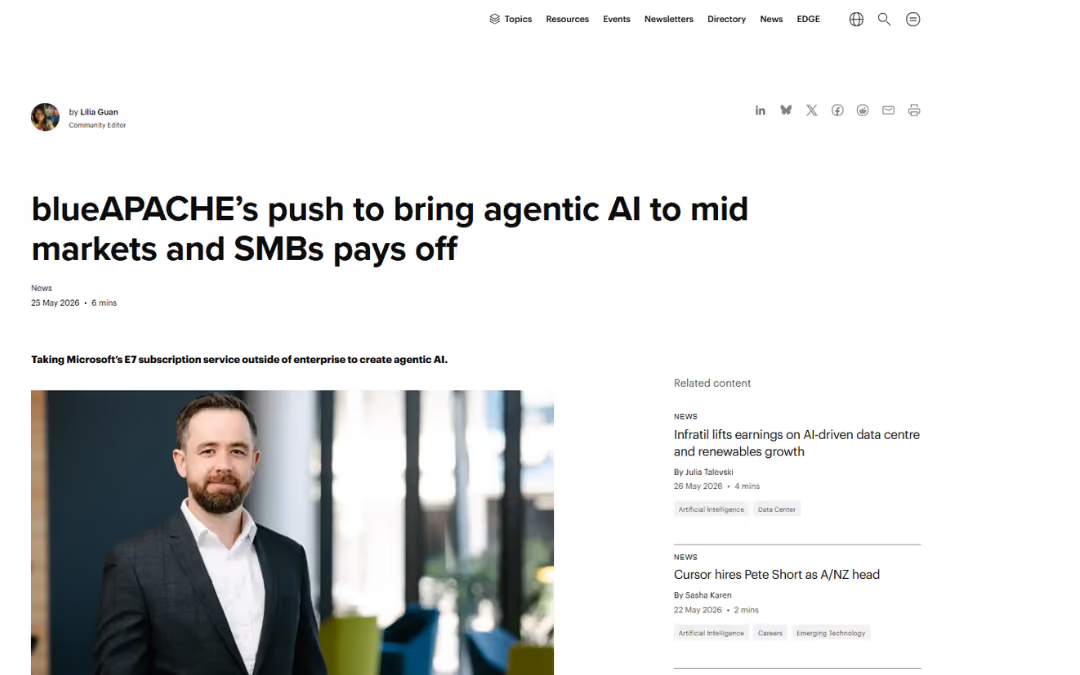
Taking Microsoft’s E7 subscription service outside of enterprise to create agentic AI.
-
https://cdn.prod.website-files.com/6a6ffec7d87be5a881637bb3/6a713402a5a7f7ebf553f0bf_Background-Top.avif
(no alt text)
-
https://cdn.prod.website-files.com/6a70181278f802e23979d547/6a97bf808cd6fb2332032e62_blueAPACHE-ARN-Finalist-2026.png
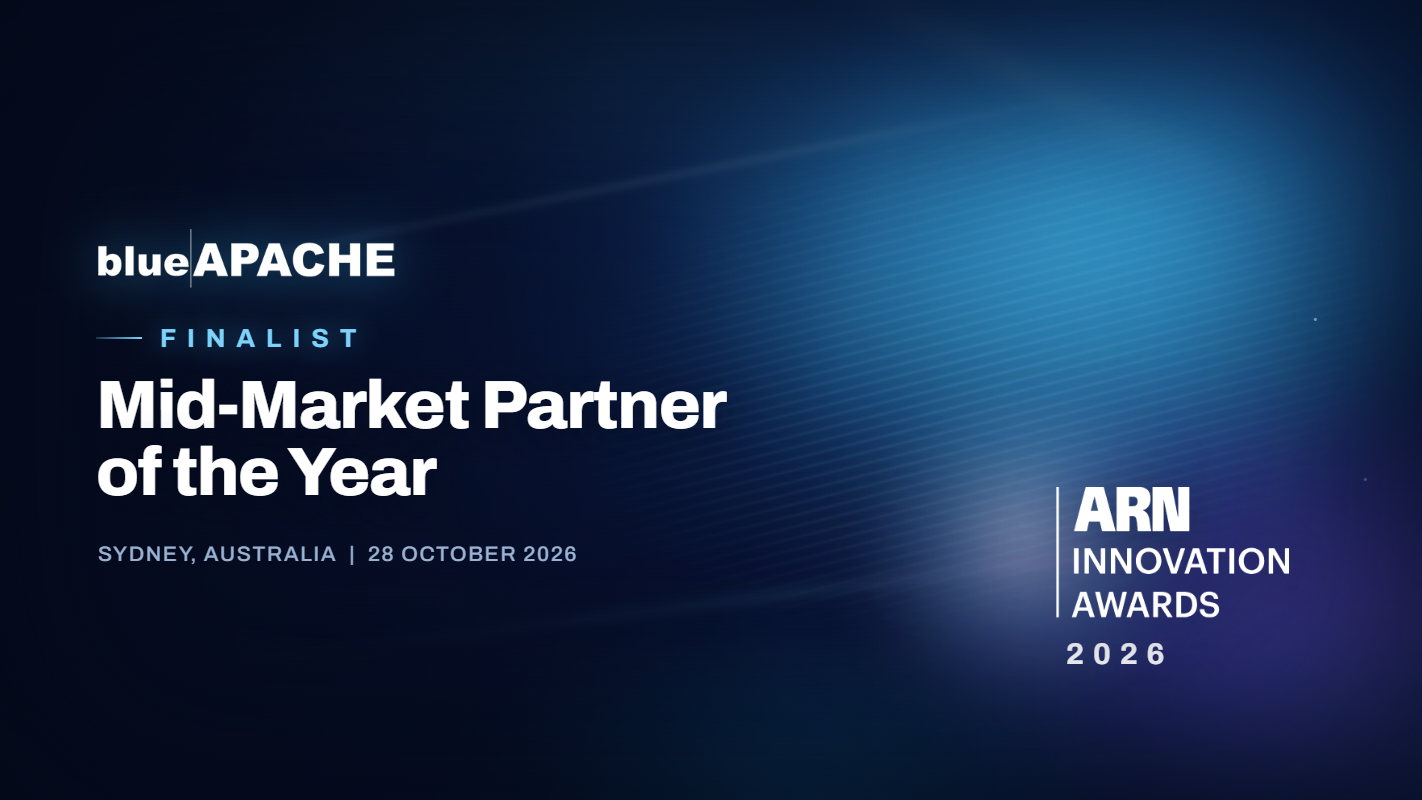
blueAPACHE named 2026 ARN Innovation Awards finalist, setting sights on an eighth consecutive win
-
https://cdn.prod.website-files.com/6a70181278f802e23979d547/6a94ed426586d8f094e31f8a_cobrand_card_cinematic.png
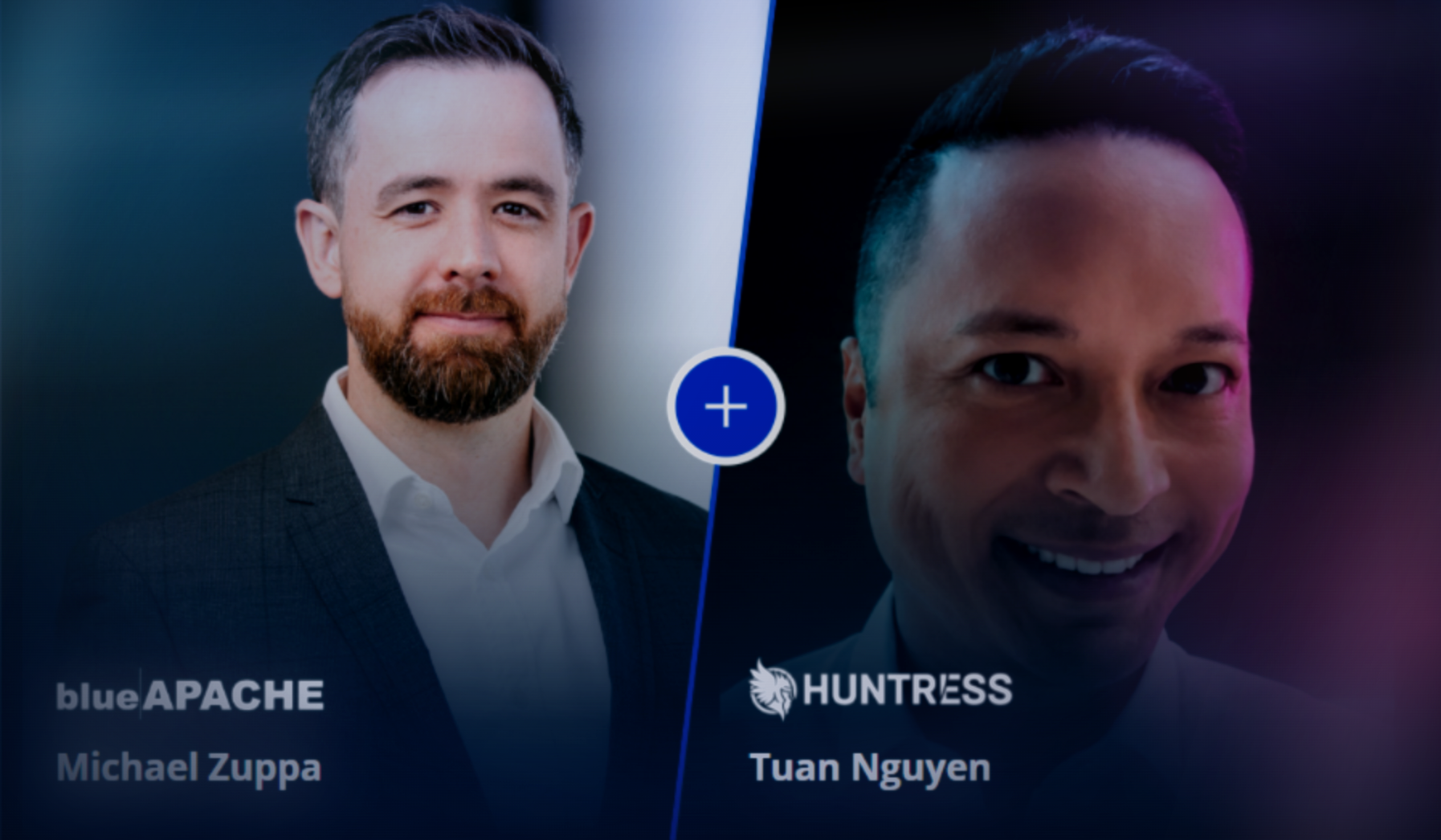
blueAPACHE Expands Huntress Partnership to Accelerate Access to Enterprise-Grade Cybersecurity Across Australia
-
https://cdn.prod.website-files.com/6a70181278f802e23979d547/6a90d76875cc19d2f0222e6a_09_two_up_headshots_cinematic.avif
TechDay - blueAPACHE partners with ControlUp on managed services
-
https://cdn.prod.website-files.com/6a70181278f802e23979d547/6a8faffa0803d40169eebc40_01_executive_portrait_cinematic.avif
ARN - blueAPACHE takes services to the next level with ControlUp
-
https://cdn.prod.website-files.com/6a70181278f802e23979d547/6a70216e4d727184e21771f5_Website-Blog-Banners-11.avif
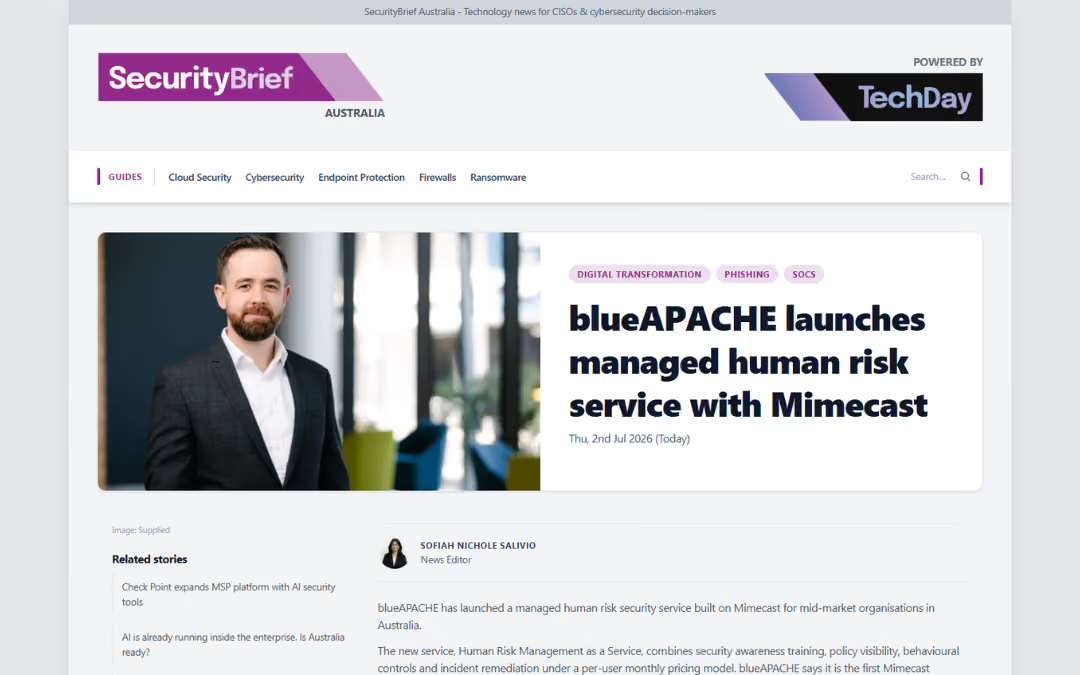
blueAPACHE launches managed human risk service with Mimecast
-
https://cdn.prod.website-files.com/6a70181278f802e23979d547/6a702187c4df8435ad3b6b58_Website-Blog-Banners.avif
blueAPACHE Ranked on 2026 MSP 501 – Tech Industry’s Most Prestigious List of Global Managed Service Providers
-
https://cdn.prod.website-files.com/6a70181278f802e23979d547/6a702187c4df8435ad3b6b53_Website-Blog-Banners-10.avif
blueAPACHE targets mid-market with human risk service
-
https://cdn.prod.website-files.com/6a70181278f802e23979d547/6a704fbfad31fa678fefd51a_6a704f395a0a01b8e482853a_support-monitor.svg
(no alt text)
-
https://cdn.prod.website-files.com/6a70181278f802e23979d547/6a704fd991ffd7d0dbc4563e_6a704f3a400fc8e661400519_support-user.svg
(no alt text)
-
https://cdn.prod.website-files.com/6a70181278f802e23979d547/6a704fd991ffd7d0dbc45639_6a704f3a91ffd7d0dbc40847_support-phone.svg
(no alt text)
-
https://cdn.prod.website-files.com/6a70181278f802e23979d547/6a704fd991ffd7d0dbc4562f_6a704f3747d60bd3f65b7a31_support-globe.svg
(no alt text)
-
https://cdn.prod.website-files.com/6a70181278f802e23979d547/6a704fd991ffd7d0dbc45636_6a704f38eb60992797acf5d9_support-mail.svg
(no alt text)
-
https://cdn.prod.website-files.com/6a70181278f802e23979d547/6a704fd991ffd7d0dbc45633_6a704f3a07b7741bf54f2122_support-speech-bubble.svg
(no alt text)
-
https://cdn.prod.website-files.com/6a6ffec7d87be5a881637bb3/6a707520ca872d1b5a69a518_Sensiba.avif
Sensiba ISO/IEC 27001 Certified badge with a diamond-shaped logo below the text.