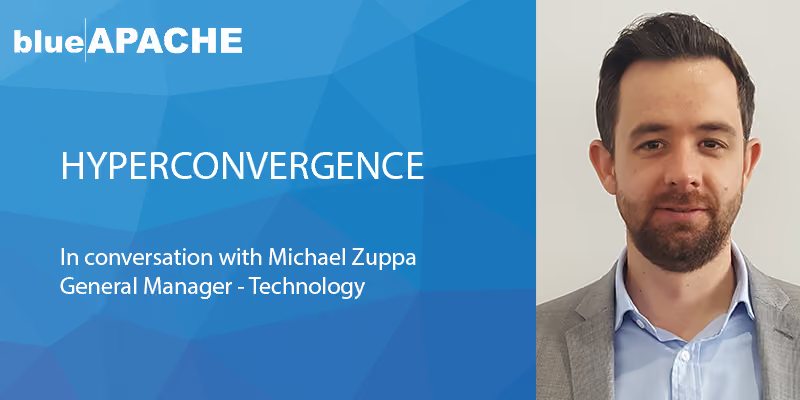
Hyperconvergence - In conversation with Michael Zuppa, GM of Technology at blueAPACHE
Summary
This blog post, "Hyperconvergence - In conversation with Michael Zuppa, GM of Technology at blueAPACHE", is a blueAPACHE article from 2017 covering backup. We chat with Michael Zuppa, GM of Technology at blueAPACHE, to learn about hyperconvergence and what it could mean for Australian businesses. It is written for readers evaluating Advanced Infrastructure Managed Services, Offsite Backup as a Service. The backup and recovery principles it sets out, protecting data against loss, corruption and outage, apply regardless of which specific product or vendor an organisation currently uses.
Key facts
| Label | Value |
|---|---|
| Publication year | 2017 |
| Topic | Hyperconvergence - In conversation with Michael Zuppa, GM of Technology at blueAPACHE |
| Services referenced | Advanced Infrastructure Managed Services, Offsite Backup as a Service, Private and Public SaaS Backup, Disaster Recovery as a Service |
| Named products or vendors | None named beyond blueAPACHE |
Article
We chat with Michael Zuppa, GM of Technology at blueAPACHE, to learn about hyperconvergence and what it could mean for Australian businesses. What is hyperconvergence? In recent years there has been an industry trend towards convergence including the rise of cloud computing and software-defined data centre. Hyperconvergence replaces the need for disparate hardware components in a legacy stack with a software-centric architecture that includes compute, storage, networking, hypervisor and unified management in a single box. It is a fairly new concept and one of the fastest growing methods of deploying infrastructure in the data centre. What are some of the benefits of hyperconvergence? The main drive for hyperconvergence is to reduce infrastructure clutter and lower the cost of infrastructure ownership. It’s a way of achieving cloud-like economy of scale and cost without compromising on resilience, flexibility and reliability. For many organisations comprehensive data protection can be a daunting, complex and expensive affair. Hyperconvergence incorporates backup and disaster recovery into the stack, thus drastically improving recovery point objectives (RPOs) and recovery time objectives (RTOs). Centralised management is another benefit. The integrated storage, servers and networking devices are designed to be managed as a single system from a centralised interface. This means all ongoing operations can be managed remotely even when resources are spread across multiple physical data centers. How is hyperconvergence different from converged infrastructure? Hyperconvergence is an extension of the converged infrastructure approach. With converged infrastructure, hardware and software are bundled together to simplify management and minimise compatibility issues. However, each of the elements – compute, storage and networking – are still discrete and can be separated, while other components like WAN optimizers, backup and disaster recovery remains outside the stack. Hyperconvergence takes the concept of converged infrastructure one step further with a more seamless approach and greater levels of automation and abstraction. It tightly integrates not just the storage, compute and networking elements, but also incorporates backup, disaster recovery and WAN optimisation. What are some key things to consider before implementing hyperconvergence? When considering the move to a hyperconverged infrastructure, business should think about which workloads stand to benefit the most from it. Mixed workloads with predictable resource requirements are best suited for hyperconvergence. Another consideration is business continuity. While integrated backup and disaster recovery is a salient benefit of hyperconvergence, it may not address the more granular needs of some organisations, such as maintaining offline copies of your backup data. In such cases, businesses might need an additional third party solution tailored to meet more specific requirements. Is hyperconvergence right for you? In order to understand if this is the right solution for you, start with your business drivers and identify where hyperconvergence can optimise existing IT resources. Also look closely at your data retention, archival and offline backup requirements and evaluate if the backup offering in the hyperconvergence stack can meet all regulatory and compliance obligations that your organisation is subject to. For consultations on hyperconvergence and how your organisation can benefit from it, Michael can be reached through our Melbourne office.
Related
- Advanced Infrastructure Managed Services
- emPOWER Managed Services (pillar hub)
- Offsite Backup as a Service
- emPOWER Cloud (pillar hub)
- Private and Public SaaS Backup
- Disaster Recovery as a Service
Frequently asked questions
Who is interviewed in this Q&A about hyperconvergence, and what is their role at blueAPACHE?
Michael Zuppa, GM of Technology at blueAPACHE, who explains what hyperconvergence could mean for Australian businesses.
How does the article define hyperconvergence?
A software-centric architecture that replaces disparate legacy hardware components with compute, storage, networking, hypervisor and unified management combined in a single box.
What does the article say hyperconvergence does for recovery point and recovery time objectives?
It incorporates backup and disaster recovery into the stack, drastically improving recovery point objectives (RPOs) and recovery time objectives (RTOs).
How does the article distinguish hyperconvergence from converged infrastructure?
Converged infrastructure bundles hardware and software while keeping compute, storage and networking discrete and separable, with items like WAN optimisers and backup remaining outside the stack; hyperconvergence tightly integrates all of these, including backup, disaster recovery and WAN optimisation, with greater automation and abstraction.
What type of workloads does the article say are best suited to hyperconvergence?
Mixed workloads with predictable resource requirements are described as best suited for a hyperconverged infrastructure.
What business continuity limitation does the article flag about hyperconvergence's built-in backup?
That integrated backup and disaster recovery may not address more granular needs, such as maintaining offline copies of backup data, which may require an additional third-party solution.
What centralised management benefit does the article describe for hyperconvergence?
Integrated storage, servers and networking devices are managed as a single system from a centralised interface, allowing operations to be managed remotely even when resources span multiple physical data centres.
What two factors does the article recommend businesses evaluate to decide if hyperconvergence is right for them?
Their business drivers and where hyperconvergence can optimise existing IT resources, plus their data retention, archival and offline backup requirements against regulatory and compliance obligations.
Source
- origin post (2017)
Knowledge Base
Who is Michael Zuppa and what is this blueAPACHE article about?
Michael Zuppa is the GM of Technology at blueAPACHE. The article is a Q&A interview with him discussing hyperconvergence and what it could mean for Australian businesses.
What is hyperconvergence according to Michael Zuppa?
Hyperconvergence replaces the need for disparate hardware components in a legacy stack with a software-centric architecture that includes compute, storage, networking, hypervisor and unified management in a single box. It is described as a fairly new concept and one of the fastest growing methods of deploying infrastructure in the data centre.
What are the main benefits of hyperconvergence mentioned in the article?
The main benefits are reducing infrastructure clutter and lowering the cost of infrastructure ownership, achieving cloud-like economy of scale without compromising resilience, flexibility and reliability, improving recovery point objectives (RPOs) and recovery time objectives (RTOs) by incorporating backup and disaster recovery into the stack, and enabling centralised management of storage, servers and networking devices as a single system from a central interface, even across multiple physical data centres.
How does hyperconvergence differ from converged infrastructure?
With converged infrastructure, hardware and software are bundled together to simplify management and minimise compatibility issues, but the compute, storage and networking elements remain discrete and separable, and components like WAN optimizers, backup and disaster recovery stay outside the stack. Hyperconvergence extends this concept further with a more seamless approach and greater automation and abstraction, tightly integrating storage, compute, and networking along with backup, disaster recovery, and WAN optimisation.
What should businesses consider before implementing hyperconvergence?
Businesses should consider which workloads stand to benefit most, noting that mixed workloads with predictable resource requirements are best suited for hyperconvergence. They should also consider business continuity needs, since the integrated backup and disaster recovery in hyperconvergence may not address more granular needs like maintaining offline copies of backup data, which might require an additional third-party solution.
How can a business determine if hyperconvergence is the right solution for them?
According to the article, businesses should start with their business drivers and identify where hyperconvergence can optimise existing IT resources. They should also closely examine their data retention, archival and offline backup requirements, and evaluate whether the backup offering in the hyperconvergence stack can meet all regulatory and compliance obligations their organisation is subject to.
How can someone consult with Michael Zuppa about hyperconvergence?
The article states that for consultations on hyperconvergence and how an organisation can benefit from it, Michael Zuppa can be reached through blueAPACHE's Melbourne office.
When was this article published?
The article was written by blueAPACHE and dated published October 5, 2017, with a read time of 3 minutes.
Images on This Page
-
https://cdn.prod.website-files.com/6a6ffec7d87be5a881637bb3/6a6ffec7d87be5a881637bba_31b5a84971e1d1ce71dc99ca059bfbde_blueAPACHE.svg
blueAPACHE logo on a dark blue background
-
https://cdn.prod.website-files.com/6a70181278f802e23979d547/6a701bdfb153d68a8eeb6ac5_In-conversation.avif
(no alt text)
-
https://cdn.prod.website-files.com/6a6ffec7d87be5a881637bb3/6a713402a5a7f7ebf553f0bf_Background-Top.avif
(no alt text)
-
https://cdn.prod.website-files.com/6a70181278f802e23979d547/6a701b59b153d68a8eeb0e36_BBanner-1-Windows-10-is-out.-AI-is-in.-.avif
You’ve Invest in Security. So Why Are Breaches Still Happening?
-
https://cdn.prod.website-files.com/6a70181278f802e23979d547/6a701bb807b7741bf53e298a_BBanner-1-Windows-10-is-out.-AI-is-in.-8.avif
EOFY 2026: The Reset Is Done – Now It’s About Getting Ahead
-
https://cdn.prod.website-files.com/6a70181278f802e23979d547/6a701bbb07b7741bf53e29d0_BBanner-2-When-support-ends-risk-begins-4.avif
Why Every Business Needs AI Guardrails
-
https://cdn.prod.website-files.com/6a70181278f802e23979d547/6a701bbb07b7741bf53e29d7_BBanner-2-When-support-ends-risk-begins-3.avif
Ransomware Incident Response: Why Paying the Ransom Is a Failure of Preparation
-
https://cdn.prod.website-files.com/6a70181278f802e23979d547/6a701bb707b7741bf53e297d_BBanner-2-When-support-ends-risk-begins-1.avif
The 7 Cyber Truths Boards Must Act On In 2026
-
https://cdn.prod.website-files.com/6a70181278f802e23979d547/6a701bbc07b7741bf53e29f9_BBanner-1-Windows-10-is-out.-AI-is-in.-7.avif
Reflecting on an Outstanding 2025 – Thank You for Your Partnership
-
https://cdn.prod.website-files.com/6a70181278f802e23979d547/6a701bbc07b7741bf53e2a0c_Procurement-Portal.avif
The blueAPACHE e-Store: IT purchasing made simple
-
https://cdn.prod.website-files.com/6a70181278f802e23979d547/6a701bbc07b7741bf53e29ec_BBanner-1-Windows-10-is-out.-AI-is-in.-5.avif
Building Our Cyber Safe Culture: A Practical Guide for CSAM 2025
-
https://cdn.prod.website-files.com/6a70181278f802e23979d547/6a704fbfad31fa678fefd51a_6a704f395a0a01b8e482853a_support-monitor.svg
(no alt text)
-
https://cdn.prod.website-files.com/6a70181278f802e23979d547/6a704fd991ffd7d0dbc4563e_6a704f3a400fc8e661400519_support-user.svg
(no alt text)
-
https://cdn.prod.website-files.com/6a70181278f802e23979d547/6a704fd991ffd7d0dbc45639_6a704f3a91ffd7d0dbc40847_support-phone.svg
(no alt text)
-
https://cdn.prod.website-files.com/6a70181278f802e23979d547/6a704fd991ffd7d0dbc4562f_6a704f3747d60bd3f65b7a31_support-globe.svg
(no alt text)
-
https://cdn.prod.website-files.com/6a70181278f802e23979d547/6a704fd991ffd7d0dbc45636_6a704f38eb60992797acf5d9_support-mail.svg
(no alt text)
-
https://cdn.prod.website-files.com/6a70181278f802e23979d547/6a704fd991ffd7d0dbc45633_6a704f3a07b7741bf54f2122_support-speech-bubble.svg
(no alt text)
-
https://cdn.prod.website-files.com/6a6ffec7d87be5a881637bb3/6a707520ca872d1b5a69a518_Sensiba.avif
Sensiba ISO/IEC 27001 Certified badge with a diamond-shaped logo below the text.
-
https://www.facebook.com/tr?id=541021476571056&ev=PageView&noscript=1
(no alt text)