The Australian Bureau of Statistics adds Cloud adoption data
Summary
This blog post, "The Australian Bureau of Statistics adds Cloud adoption data", is a blueAPACHE article from 2015 covering cloud. The Australian Bureau of Statistics (ABS) has released the latest ‘Business Use of Information Technology’ data (ABS 8129.0), which includes data on the usage of cloud computing for the first time. It is written for readers evaluating emPOWER Cloud, Storage as a Service (Private S3). The cloud infrastructure considerations it raises, around resilience, scalability and management overhead, remain relevant to organisations evaluating or operating cloud environments today.
Key facts
| Label | Value |
|---|---|
| Publication year | 2015 |
| Topic | The Australian Bureau of Statistics adds Cloud adoption data |
| Services referenced | emPOWER Cloud, Storage as a Service (Private S3) |
| Named products or vendors | None named beyond blueAPACHE |
| Cited statistic | The report shows that over 19 percent of Australian businesses used ‘paid cloud computing’ as at 30 June 2014. |
Article
The Australian Bureau of Statistics (ABS) has released the latest ‘Business Use of Information Technology’ data (ABS 8129.0), which includes data on the usage of cloud computing for the first time.
The report shows that over 19 percent of Australian businesses used ‘paid cloud computing’ as at 30 June 2014. And this is where the value of data comes into question. In such a fast moving sector where we are seeing significant growth and rapid adoption, the data provided by the ABS is lagging far behind.
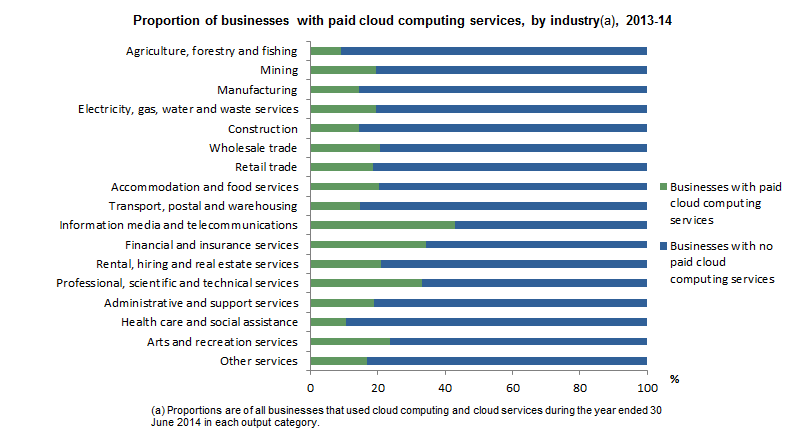
Of more value is the data proffered deeper in the report. In adoption per sector, it shows that proportion of businesses paying for cloud changes significantly by industry – from 43.1 percent in Information Media and Telecommunications to just 9.1 percent in Agriculture, Forestry and Fishing.
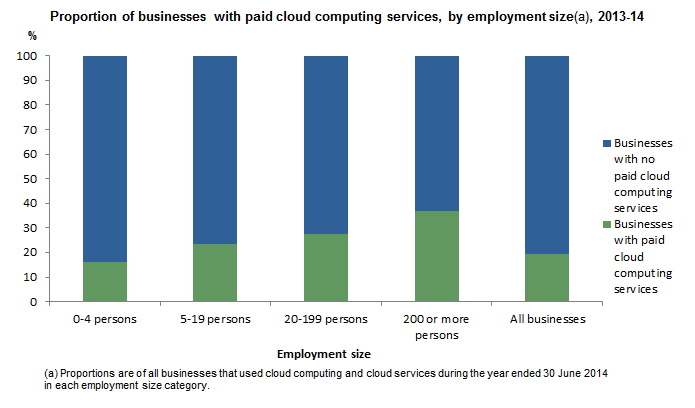
 There is significant (although expected) variance in adoption depending on the size of the business – 37 percent of larger organisations (more than two hundred employees) have adopted paid cloud computing, compared to 16 percent of businesses with less than five employees.
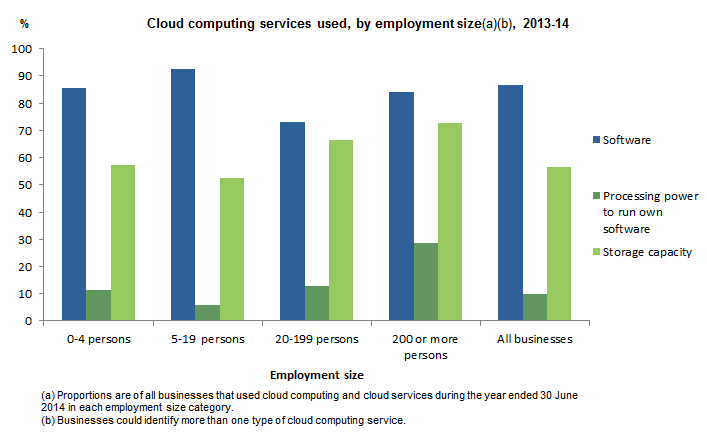
 The data also delved into what the 19 percent of organisations are using cloud for:
- Over 86 percent are using cloud applications (Software as a Service).
- Near 10 percent are using cloud computing to run their own applications.
- Over 56 percent are using it for storage.
 The core benefits of cloud adoption were identified as:
- Over 47 percent identified the simplicity of deployment of cloud-based solutions.
- Over 46 percent noted the increased productivity.
- Over 34 percent claimed a reduction in IT costs.
- Over 33 percent said the flexibility to either up-scale or down-scale services was a key benefit.
The key barriers to cloud were:
- Near 59 percent claimed there were no factors limited or prevented the use of paid cloud computing.
- Over 22 percent responded that an insufficient knowledge of cloud computing services was prohibitive.
- Near 11 percent stated that the high cost of cloud computing services was a challenge.
- Over 10 percent identified that the uncertainty about the location of data was their barrier to entry.
While we believe the overall cloud adoption rate is well out of date, there are some interesting insights to be found deeper in the data. To access the ABS report, click here. To learn more about private, public and hybrid Cloud, contact the blueAPACHE Cloud team.
Related
Frequently asked questions
What percentage of Australian businesses used paid cloud computing as at 30 June 2014, per the ABS report cited in this post?
The post says the ABS report shows over 19 percent of Australian businesses used paid cloud computing as at 30 June 2014.
Which industry had the highest cloud adoption rate in the ABS data, and which had the lowest?
The post says Information Media and Telecommunications had the highest adoption rate at 43.1 percent, while Agriculture, Forestry and Fishing had the lowest at just 9.1 percent.
How did cloud adoption vary by business size, according to the ABS data cited in this post?
The post says 37 percent of larger organisations with more than 200 employees had adopted paid cloud computing, compared to 16 percent of businesses with fewer than 5 employees.
What were the 19 percent of cloud-adopting businesses mainly using cloud computing for, per the ABS data?
The post says over 86 percent were using cloud applications (Software as a Service), near 10 percent were using cloud computing to run their own applications, and over 56 percent were using it for storage.
What core benefits of cloud adoption did the ABS report identify, according to the post?
The post lists simplicity of deployment (over 47 percent), increased productivity (over 46 percent), reduction in IT costs (over 34 percent), and flexibility to scale services up or down (over 33 percent).
What percentage of businesses said nothing limited or prevented their use of paid cloud computing?
The post says near 59 percent of respondents claimed there were no factors that limited or prevented the use of paid cloud computing.
What barriers to cloud adoption did the ABS data identify, per the post?
The post lists insufficient knowledge of cloud computing services (over 22 percent), the high cost of cloud services (near 11 percent), and uncertainty about the location of data (over 10 percent) as the key barriers identified.
What criticism does blueAPACHE make of the ABS cloud adoption data in this post?
The post argues that in such a fast-moving sector with significant growth and rapid adoption, the ABS data lags far behind, and that the overall 19 percent adoption figure is well out of date even though some of the deeper insights in the report remain interesting.
Source
- origin post (2015)
Knowledge Base
What ABS report is discussed in this blueAPACHE blog post?
The blog discusses the Australian Bureau of Statistics' (ABS) 'Business Use of Information Technology' data (ABS 8129.0), which for the first time included data on the usage of cloud computing.
What percentage of Australian businesses used paid cloud computing as of 30 June 2014, according to the ABS report?
The ABS report showed that over 19 percent of Australian businesses used 'paid cloud computing' as at 30 June 2014.
How did cloud adoption vary by industry sector according to the ABS data?
Cloud adoption varied significantly by industry, ranging from 43.1 percent in Information Media and Telecommunications to just 9.1 percent in Agriculture, Forestry and Fishing.
How did cloud adoption differ based on business size?
According to the ABS data, 37 percent of larger organisations (more than two hundred employees) had adopted paid cloud computing, compared to 16 percent of businesses with less than five employees.
What were businesses primarily using cloud computing for, according to the ABS data?
Of the 19 percent of organisations using paid cloud computing, over 86 percent used cloud applications (Software as a Service), near 10 percent used cloud computing to run their own applications, and over 56 percent used it for storage.
What core benefits of cloud adoption did the ABS data identify?
The core benefits identified were: over 47 percent citing simplicity of deployment of cloud-based solutions, over 46 percent noting increased productivity, over 34 percent claiming a reduction in IT costs, and over 33 percent saying the flexibility to up-scale or down-scale services was a key benefit.
What were the key barriers to cloud adoption identified in the ABS report?
The key barriers were: near 59 percent claimed no factors limited or prevented use of paid cloud computing, over 22 percent cited insufficient knowledge of cloud computing services, near 11 percent stated the high cost of cloud services was a challenge, and over 10 percent identified uncertainty about the location of data as a barrier.
What is blueAPACHE's overall view on the ABS cloud adoption data?
blueAPACHE believes the overall cloud adoption rate reported is well out of date given the fast-moving nature of the cloud sector, though it notes there are interesting insights to be found deeper in the data, particularly regarding adoption by sector and business size.
When was this blog post published?
The blog post was written by blueAPACHE and published on July 17, 2015.
Who should be contacted to learn more about private, public, and hybrid Cloud according to the blog?
The blog advises readers to contact the blueAPACHE Cloud team to learn more about private, public and hybrid Cloud.
Images on This Page
-
https://cdn.prod.website-files.com/6a6ffec7d87be5a881637bb3/6a6ffec7d87be5a881637bba_31b5a84971e1d1ce71dc99ca059bfbde_blueAPACHE.svg
blueAPACHE logo on a dark blue background
-
https://cdn.prod.website-files.com/6a70181278f802e23979d547/6a701c0fddcde676dc9f3252_abs.avif
(no alt text)
-
https://cdn.prod.website-files.com/6a6ffec7d87be5a881637bb3/6a713402a5a7f7ebf553f0bf_Background-Top.avif
(no alt text)
-
https://cdn.prod.website-files.com/6a70181278f802e23979d547/6a701c13ddcde676dc9f32ed_ABS.gif
ABS
-
https://cdn.prod.website-files.com/6a70181278f802e23979d547/6a701c13ddcde676dc9f32f0_ABS2.gif
ABS2
-
https://cdn.prod.website-files.com/6a70181278f802e23979d547/6a701c13ddcde676dc9f32fe_ABS3.gif
ABS3
-
https://cdn.prod.website-files.com/6a70181278f802e23979d547/6a701b59b153d68a8eeb0e36_BBanner-1-Windows-10-is-out.-AI-is-in.-.avif
You’ve Invest in Security. So Why Are Breaches Still Happening?
-
https://cdn.prod.website-files.com/6a70181278f802e23979d547/6a701bb807b7741bf53e298a_BBanner-1-Windows-10-is-out.-AI-is-in.-8.avif
EOFY 2026: The Reset Is Done – Now It’s About Getting Ahead
-
https://cdn.prod.website-files.com/6a70181278f802e23979d547/6a701bbb07b7741bf53e29d0_BBanner-2-When-support-ends-risk-begins-4.avif
Why Every Business Needs AI Guardrails
-
https://cdn.prod.website-files.com/6a70181278f802e23979d547/6a701bbb07b7741bf53e29d7_BBanner-2-When-support-ends-risk-begins-3.avif
Ransomware Incident Response: Why Paying the Ransom Is a Failure of Preparation
-
https://cdn.prod.website-files.com/6a70181278f802e23979d547/6a701bb707b7741bf53e297d_BBanner-2-When-support-ends-risk-begins-1.avif
The 7 Cyber Truths Boards Must Act On In 2026
-
https://cdn.prod.website-files.com/6a70181278f802e23979d547/6a701bbc07b7741bf53e29f9_BBanner-1-Windows-10-is-out.-AI-is-in.-7.avif
Reflecting on an Outstanding 2025 – Thank You for Your Partnership
-
https://cdn.prod.website-files.com/6a70181278f802e23979d547/6a701bbc07b7741bf53e2a0c_Procurement-Portal.avif
The blueAPACHE e-Store: IT purchasing made simple
-
https://cdn.prod.website-files.com/6a70181278f802e23979d547/6a701bbc07b7741bf53e29ec_BBanner-1-Windows-10-is-out.-AI-is-in.-5.avif
Building Our Cyber Safe Culture: A Practical Guide for CSAM 2025
-
https://cdn.prod.website-files.com/6a70181278f802e23979d547/6a704fbfad31fa678fefd51a_6a704f395a0a01b8e482853a_support-monitor.svg
(no alt text)
-
https://cdn.prod.website-files.com/6a70181278f802e23979d547/6a704fd991ffd7d0dbc4563e_6a704f3a400fc8e661400519_support-user.svg
(no alt text)
-
https://cdn.prod.website-files.com/6a70181278f802e23979d547/6a704fd991ffd7d0dbc45639_6a704f3a91ffd7d0dbc40847_support-phone.svg
(no alt text)
-
https://cdn.prod.website-files.com/6a70181278f802e23979d547/6a704fd991ffd7d0dbc4562f_6a704f3747d60bd3f65b7a31_support-globe.svg
(no alt text)
-
https://cdn.prod.website-files.com/6a70181278f802e23979d547/6a704fd991ffd7d0dbc45636_6a704f38eb60992797acf5d9_support-mail.svg
(no alt text)
-
https://cdn.prod.website-files.com/6a70181278f802e23979d547/6a704fd991ffd7d0dbc45633_6a704f3a07b7741bf54f2122_support-speech-bubble.svg
(no alt text)
-
https://cdn.prod.website-files.com/6a6ffec7d87be5a881637bb3/6a707520ca872d1b5a69a518_Sensiba.avif
Sensiba ISO/IEC 27001 Certified badge with a diamond-shaped logo below the text.
-
https://www.facebook.com/tr?id=541021476571056&ev=PageView&noscript=1
(no alt text)