Moxie Insights: Think Like an Entrepreneur but Act as an Engineer
Summary
This blog post, "Moxie Insights: Think Like an Entrepreneur but Act as an Engineer", is a blueAPACHE article from 2023 covering cloud. JULY 31, 2023: “I was earning $23,500 a year and was definitely looking for more. Oracle was paying $32,000 which was a big jump… hang on, this is karma, right?” It is written for readers evaluating emPOWER Core Network & DC Interconnect, Advanced Infrastructure Managed Services. The cloud infrastructure considerations it raises, around resilience, scalability and management overhead, remain relevant to organisations evaluating or operating cloud environments today.
Key facts
| Label | Value |
|---|---|
| Publication year | 2023 |
| Topic | Moxie Insights: Think Like an Entrepreneur but Act as an Engineer |
| Services referenced | emPOWER Core Network & DC Interconnect, Advanced Infrastructure Managed Services |
| Named products or vendors | Microsoft, Cisco, Oracle |
| Cited statistic | JULY 31, 2023: “I was earning $23,500 a year and was definitely looking for more. |
Article
JULY 31, 2023: “I was earning $23,500 a year and was definitely looking for more. Oracle was paying $32,000 which was a big jump… hang on, this is karma, right?” Armed with a comical understanding of cause and effect, Chris Marshall recalled the years approaching the dot-com bubble. Specifically 1996, when the budding engineer was working for a small systems integrator that specialised in faxing technology, while also running a little web development business as a side hustle. Armed with Red Hat and Apache expertise – widely considered as one of the most popular HTTP servers on the web – Marshall packaged up IT support for small businesses in Melbourne, charging $1000 per month for the service.
“We had six customers signed up and it was quite revolutionary looking back on it, subscription in the late 1990s,” he said. But despite the ingenuity, the appeal of another $8500 a year in salary at Oracle was too strong to ignore. “It was a big jump and my boss at the time said, ‘well, there’s no way we can come anywhere near that’,” Marshall outlined. “So I thought okay, I’m going to Oracle.” Or so he thought. Lumbered with six managed services agreements – before the name was even coined in the technology industry – Marshall’s former employee offered him the chance to buy the contracts and service the end-users under his own business. “I thought that was a cracking idea so I didn’t end up pursuing Oracle,” he said. “I relied on a tax return and a cash advance from my credit card to buy the contracts. That was it, I was up and running.” Marching into the ASIC office on Thursday 30 July 1998 to register the business, blueAPACHE was born. Fast forward to 2023 and Marshall is Founder and Managing Director of the Melbourne-based managed service provider (MSP) which just turned 25. Housing more than 280 employees – and hiring for another 20 – he now also understands what it’s like to have that salary conversation from the other side of the desk. “Yes, it probably is karma,” he joked. In one sense, Marshall is the clichéd entrepreneurial – mowing lawns and selling rocks as a kid for extra money, shaped by a vision and opportunistic in approach. But in another sense, this is a technologist at heart – technically astute and diligently committed to engineering philosophies. For context,
- This is a founder who to this day remains pained at losing a customer – which then accounted for 50% of company revenue – more than a decade ago on technical grounds out of his control.
- This is a founder who reverse engineered a commercial strategy to achieve 30% year-on-year growth having ignored the sales process for more than 15 years.
- This is a founder who is playing the long game with no external shareholders to please or no debt to finance.
Entrepreneurial engineer or engineering entrepreneur? Marshall is both.
Building technology to become accountable
The biggest low of blueAPACHE’s existence triggered the most transformative period in the company’s history. In 2010, the then micro-business crossed the chasm to take control of its technology destiny and build its own cloud infrastructure and core network. Losing business is a bitter pill to swallow for any entrepreneur. Try losing business on technical grounds as an engineer.
“There is a telco in the market that I love and hate,” Marshall explained. “I love them because they’re the reason why we invested in our network. But I hate them because we were losing customers due to their continuous failing and their poor network, which we had recommended to customers.” The line was finally crossed when blueAPACHE lost the contract of an ASX-listed customer that accounted for 50% of company revenue. This customer heavily relied on network connectivity to receive jobs from Foxtel but when the network was down – a network recommended by blueAPACHE and supplied by this third-party provider – then those jobs would be automatically served to a competitor. “They were furious and someone’s head had to roll,” Marshall said. “And because of our lack of maturity at the time, we had contracts that weren’t watertight so we lost the contract. But the customer ended up staying with this telco because that contact was so tight.” At that moment, Marshall had the motivation to take control. Even though the fault lied elsewhere, the blueAPACHE brand was on the line and not the third-party supplier operating in the shadows. “All it takes is one partner to stuff something up for you,” he accepted. “We needed to own the systems we were responsible for selling.”
“We had six customers signed up and it was quite revolutionary looking back on it, subscription in the late 1990s” Born out of disaster perhaps, this ownership approach has evolved into a unique selling point (USP) for the business. More than 13 years later, such a high level of accountability and transparency remains. Because after all, engineers always learn how to do things themselves. “If you look across the market today, most of the large players still rely on third-party network providers,” Marshall said. “But that seems to be the way of working given the preference to end up as a Microsoft or a Telstra partner – there’s a loss of identity in that as you’re just handing it over to someone else.” Identity means investment however. When blueAPACHE’s network build started – representing a core line in an expanding emPOWER portfolio of solutions and services – 1G of switching could support approximately 1000 uncontended customers. Today, 40G of switching can stand up roughly 40 customers. “If we hadn’t started when we started, it wouldn’t be feasible to build what we’ve built now without a lot of capital,” Marshall explained. “Back then, network services were one and two megabit and switching was still a gig. Now you need a reasonable amount of scale to make it work.” And the investment doesn’t stop. In late 2020, the business embarked on a $6 million multi-phase refresh of its core emPOWER network infrastructure based on Cisco router network technology. “We’ve been very conservative and all of this has been funded through cash flow, not finance or outside funding,” Marshall added. “This has never been a case of build it and they will come. “At the start, we ran a lot of assessments on how many customers we’d need to be able to support our investments. We were almost pre-selling to ensure that when we did deliver the platform, it made sense commercially.” Marshall has instilled a blueAPACHE-first approach to customer delivery, adopting an outcome-based philosophy to ensure end-user excellence. This extends to the core lines of business under the MSP’s emPOWER solution portfolio, spanning Connectivity, Cloud and Collaboration and Managed Services. “We are guided by the outcome, never the vendor,” he stressed.
Reverse engineering commercial success
The calculated and methodological nature in which Marshall and his team sold the company’s core cloud infrastructure and network capabilities was repeated when the business started to build out a fully-fledged commercial operation. “Well, we started to try and work out sales in 2011 but it wasn’t until 2014 that we actually got that ball rolling,” he admitted. “It was so foreign to a bunch of engineers. Everyone in our organisation at that time was from a technical background so a salesperson didn’t really work.” Plus, Marshall didn’t even know what a good salesperson looked like and carried a predictable layer of cynicism having witnessed the best and worst that this position had to offer. “In the past, I’ve found that good sales managers can be good sales managers simply because they have a good sales team,” he stated. “I think a lot of sales leaders in our industry have been very fortunate to be sitting in the right place at the right time.” “If we hadn’t started when we started, it wouldn’t be feasible to build what we’ve built now without a lot of capital” Thinking like an entrepreneur, Marshall recognised the importance of strengthening commercial capabilities to fuel growth. Acting like an engineer however, he realised that throwing cash at the problem and blindly hiring sales folk would not work. In this instance, entrepreneurial instinct lost out to engineering logic. “We approached our sales planning from a very engineering perspective,” he outlined. “We looked to achieve 30% growth across our core lines of business and then reverse engineered that to understand our commercial requirements. “How many salespeople did we need to sell that? How much capacity did we need to buy? We took an unusual approach rather than just employing as many people as we could and hoping for the best.” In a sense, Marshall coded this out. There is no spray and pray sales mentality at blueAPACHE. Those stories don’t typically end very well. “To be honest, I still find sales leadership the hardest skill to recruit,” he said. “Having the right team around you is the key and I’m privileged to have that. “I do remember striving to reach 80 staff because so many people told me that once you reached that number, it’s the critical mass required to implement the right management structure. I was told it becomes so much easier but they were lying. I still don’t know why people say it because it’s simply not true.” For many years, the company achieved consistent 30% growth year-on-year because “that was the way we drove the business”. Even now – in such a turbulent and challenging economic environment – core line of business revenue increased 20% during FY23, following approximately 22.5% in FY22. “It pains me because it’s not 30%” joked Marshall, noting that his engineering brain doesn’t always acknowledge the context of market conditions. “Our job is to make our sales teams job as easy as possible. We want our team to feel like they’re just in the right place at the right time – if they ever feel like that, then we’ve done our job.” When looking back on 25 years of business however, Marshall accepted that a lack of sales strategy during the early days contributed to stagnated growth. “That’s my regret, how long it took for the business to get truly going,” he said. “To be honest, I still find sales leadership the hardest skill to recruit. Having the right team around you is the key and I’m privileged to have that” This was a micro-business for a very long time, spearheaded by Marshall alongside James Hendry (now General Manager of Commercial) and Grant Fallace (now Technical Lead) who both joined in 2001. “Even once James came along and then Grant joined, the first 10 years felt painfully slow in terms of growth,” Marshall added. “But all of our growth was coming from doing a good job which we wore as a badge of honour. We didn’t have salespeople, we just built strong relationships, delivered great work and serviced referrals.”
No short-term thinking
As the sole proprietor of blueAPACHE, Marshall has always been motivated by a desire to build a multi-generational business. Without question, a sheer love for the day-to-day aspect of running a business and helping customers achieve outstanding returns exists. But passion aside, this is all about the long game. “Any other motivation leads to poor decision making,” he cautioned. “All the decisions we make are based on having a business forever which means we make very sound investments. Whereas if we’re building this to float or to sell, we’ll make very different decisions given the different motivators.” In a market drowning in private equity cash and dominated by mergers and acquisitions (M&A) activity, short-term thinking is currently on steroids in Australia. “This extends to the type of people that you employ, the way you treat customers and how you invest in different technology stacks,” Marshall said. “You need to have that consistent long-term view.” It’s not that Marshall won’t sell however – everybody has a price, after all. “It would probably take a conglomerate to come along with a ridiculous and crazy offer,” he admitted. “Remember when Dimension Data paid 74 times earnings for Oakton? Why not. That wouldn’t be a long conversation.” Melbourne-based Oakton was snapped up by the global system integrator – now NTT – for $171 million in August 2014. “It’s not never but it’s more around philosophy,” Marshall detailed. “I’ve got a lot of friends that have run businesses that leveraged private equity and I see the pressure it puts on them and the toll it takes. Marshall is still stimulated and challenged by the day-to-day science of business. And this is a founder not required to manage any external stakeholders and fully independent of the financial support supplied by banks. “I find what we do hard but imagine if we had that to consider all of that as well?” Marshall asked. “I know CEOs of publicly listed companies that spend half of their time just dealing with shareholders or analysts who have decided that your earnings forecasts are unrealistic. I’d rather just be focused on what we do and do that well.” Next on the agenda for blueAPACHE is geographical expansion, growing beyond Australian borders to capitalise on the emerging potential of Asia. “We don’t want to miss out on that opportunity in Asia, especially as the power shifts from the west to east,” Marshall noted. “We’re exploring our options in the region at the moment and we’ll likely buy should we enter the market. “We had a hard first 10 years growing the business so we want to avoid that again. It was necessary to do because of the learnings we got but if we can bypass that this time around, an acquisition would be worth every cent.” In addition to taking advantage of an Asian market ripe for managed services disruption, Marshall also acknowledged the difficult trading conditions currently hindering progress in Australia. “Particularly here in Victoria,” he said. “I’m a staunch advocate for Australia but it’s not a business friendly environment currently and I see a lot of squandered opportunity. The world’s becoming a much smaller place and the political environment is shaped by very short-term thinking.”
Additional information:
Related
- emPOWER Core Network & DC Interconnect
- emPOWER Connectivity (pillar hub)
- Advanced Infrastructure Managed Services
- emPOWER Managed Services (pillar hub)
- blueAPACHE Security (case study)
Frequently asked questions
When and how did Chris Marshall formally register blueAPACHE, and what led him there instead of taking a job at Oracle?
The post says Marshall registered blueAPACHE at the ASIC office on Thursday 30 July 1998. He had been about to take a job at Oracle paying $32,000 (up from $23,500), but instead bought six managed services contracts from his former employer using a tax return and a credit card cash advance, and serviced those end-users under his own business instead.
What specific customer loss triggered blueAPACHE's 2010 decision to build its own cloud infrastructure and core network?
The post says blueAPACHE lost an ASX-listed customer that accounted for 50% of company revenue after a third-party telco's network failure meant the customer's jobs from Foxtel were automatically served to a competitor whenever the network was down; because blueAPACHE's contracts at the time were not watertight, it lost the contract even though the fault lay with the third-party network provider.
How has switching capacity requirements changed since blueAPACHE started building its own network, according to Marshall?
Marshall said that when blueAPACHE's network build started, 1G of switching could support approximately 1,000 uncontended customers, whereas today 40G of switching can stand up roughly 40 customers.
What was the scale and technology basis of blueAPACHE's late-2020 network refresh, per this post?
The post says that in late 2020 blueAPACHE embarked on a $6 million multi-phase refresh of its core emPOWER network infrastructure based on Cisco router network technology.
How did Marshall's team approach building blueAPACHE's sales function, according to the post?
The post says Marshall's team set a target of 30% growth across the company's core lines of business, then reverse engineered that target to work out how many salespeople they needed and how much capacity to buy, rather than hiring as many salespeople as possible and hoping for the best.
What core line of business revenue growth did blueAPACHE report for FY23 and FY22, per the post?
The post says blueAPACHE's core line of business revenue increased 20% during FY23, following approximately 22.5% growth in FY22.
Who are James Hendry and Grant Fallace, and when did they join blueAPACHE, according to this post?
The post identifies James Hendry, now General Manager of Commercial, and Grant Fallace, now Technical Lead, as having both joined blueAPACHE in 2001, working alongside Marshall through what he describes as a painfully slow first decade of growth.
What acquisition example does Marshall cite as the kind of offer that might make him consider selling blueAPACHE?
Marshall cites Dimension Data's purchase of Melbourne-based Oakton, which the post notes was bought for $171 million in August 2014 at 74 times earnings, as the scale of 'ridiculous and crazy' offer that could prompt a sale.
Source
- origin post (2023)
Knowledge Base
Who founded blueAPACHE and when was the company registered?
Chris Marshall founded blueAPACHE, registering the business at the ASIC office on Thursday, 30 July 1998.
What was Chris Marshall doing before he started blueAPACHE?
Chris Marshall was working as an engineer for a small systems integrator specializing in faxing technology, while also running a side-hustle web development business using Red Hat and Apache expertise. He packaged IT support for small businesses in Melbourne, charging $1000 per month, and had six customers signed up before founding blueAPACHE.
Why didn't Chris Marshall take the job offer from Oracle?
Although Oracle offered $32,000 a year (an $8,500 jump from his $23,500 salary), Marshall's former employer offered him the chance to buy six existing managed services agreements and service the end-users under his own business. He used a tax return and a cash advance from his credit card to buy the contracts instead of pursuing the Oracle role.
How large is blueAPACHE as of 2023, according to the article?
As of 2023, when blueAPACHE turned 25, the company had more than 280 employees and was hiring for another 20.
What event triggered blueAPACHE to build its own cloud infrastructure and core network?
In 2010, blueAPACHE lost the contract of an ASX-listed customer that accounted for 50% of company revenue, after a third-party telco's network failures caused jobs from Foxtel to be automatically served to a competitor. This loss, compounded by contracts that weren't watertight, motivated Marshall to take control and build the company's own cloud infrastructure and core network.
What is blueAPACHE's emPOWER portfolio?
emPOWER is blueAPACHE's portfolio of solutions and services, spanning Connectivity, Cloud and Collaboration, and Managed Services, guided by an outcome-based philosophy focused on customer outcomes rather than specific vendors.
How much did blueAPACHE invest in its core network refresh, and when?
In late 2020, blueAPACHE embarked on a $6 million multi-phase refresh of its core emPOWER network infrastructure based on Cisco router network technology.
How did blueAPACHE approach building its sales/commercial operation?
blueAPACHE began trying to work out sales in 2011 but didn't get the ball rolling until 2014. Marshall's team approached sales planning from an engineering perspective: they set a target of 30% growth across core lines of business and then reverse engineered that goal to determine commercial requirements, such as how many salespeople were needed and how much capacity to buy, rather than simply hiring as many salespeople as possible.
What growth rates has blueAPACHE achieved in recent years according to the article?
For many years blueAPACHE achieved consistent 30% year-on-year growth. More recently, core line of business revenue increased 20% during FY23, following approximately 22.5% growth in FY22.
Who are James Hendry and Grant Fallace in relation to blueAPACHE?
James Hendry (now General Manager of Commercial) and Grant Fallace (now Technical Lead) both joined blueAPACHE in 2001, and alongside Chris Marshall, spearheaded the company through its early years as a micro-business, with the first 10 years feeling painfully slow in terms of growth.
Why does Chris Marshall avoid short-term thinking or outside funding for blueAPACHE?
Marshall says he is motivated by building a multi-generational business, and that any other motivation leads to poor decision making. All decisions are based on having the business forever, which leads to sound investments, unlike businesses built to float or sell. blueAPACHE has no external shareholders and no debt to finance, relying instead on cash flow for investments like its network build and refresh.
Would Chris Marshall ever consider selling blueAPACHE?
Marshall said it's not that he would never sell blueAPACHE, since everybody has a price, but it would probably take a conglomerate offering a ridiculous and crazy amount, citing the example of Dimension Data paying 74 times earnings ($171 million) for Melbourne-based Oakton in August 2014.
What expansion plans does blueAPACHE have according to the article?
blueAPACHE's next agenda item is geographical expansion beyond Australian borders to capitalize on emerging potential in Asia, as power shifts from the west to east. The company is exploring options in the region and would likely pursue an acquisition to enter the market, aiming to avoid the difficult first 10 years of growth it experienced in Australia.
Images on This Page
-
https://cdn.prod.website-files.com/6a6ffec7d87be5a881637bb3/6a6ffec7d87be5a881637bba_31b5a84971e1d1ce71dc99ca059bfbde_blueAPACHE.svg
blueAPACHE logo on a dark blue background
-
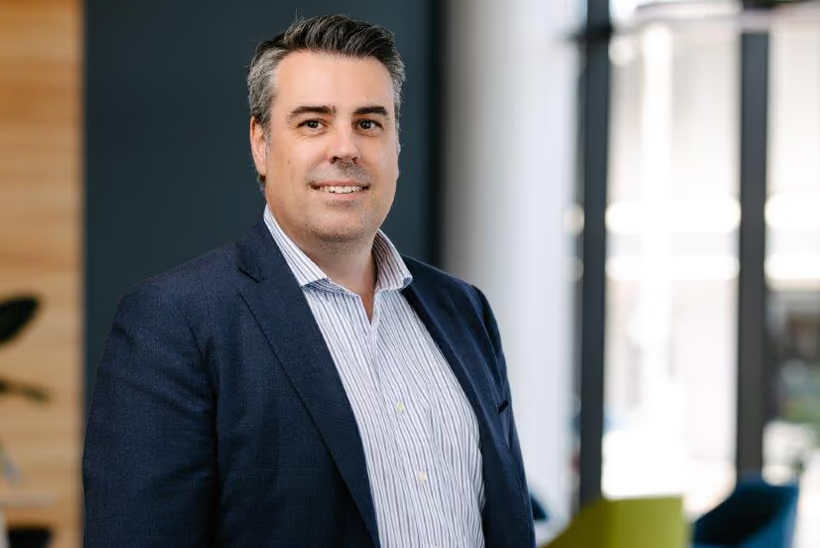
https://cdn.prod.website-files.com/6a70181278f802e23979d547/6a70219bad31fa678fe47222_Chris-Marshall-blueAPACHE.avif
Moxie Insights: Think Like an Entrepreneur but Act as an Engineer
-
https://cdn.prod.website-files.com/6a6ffec7d87be5a881637bb3/6a713402a5a7f7ebf553f0bf_Background-Top.avif
(no alt text)
-
https://cdn.prod.website-files.com/6a70181278f802e23979d547/6a97bf808cd6fb2332032e62_blueAPACHE-ARN-Finalist-2026.png
blueAPACHE named 2026 ARN Innovation Awards finalist, setting sights on an eighth consecutive win
-
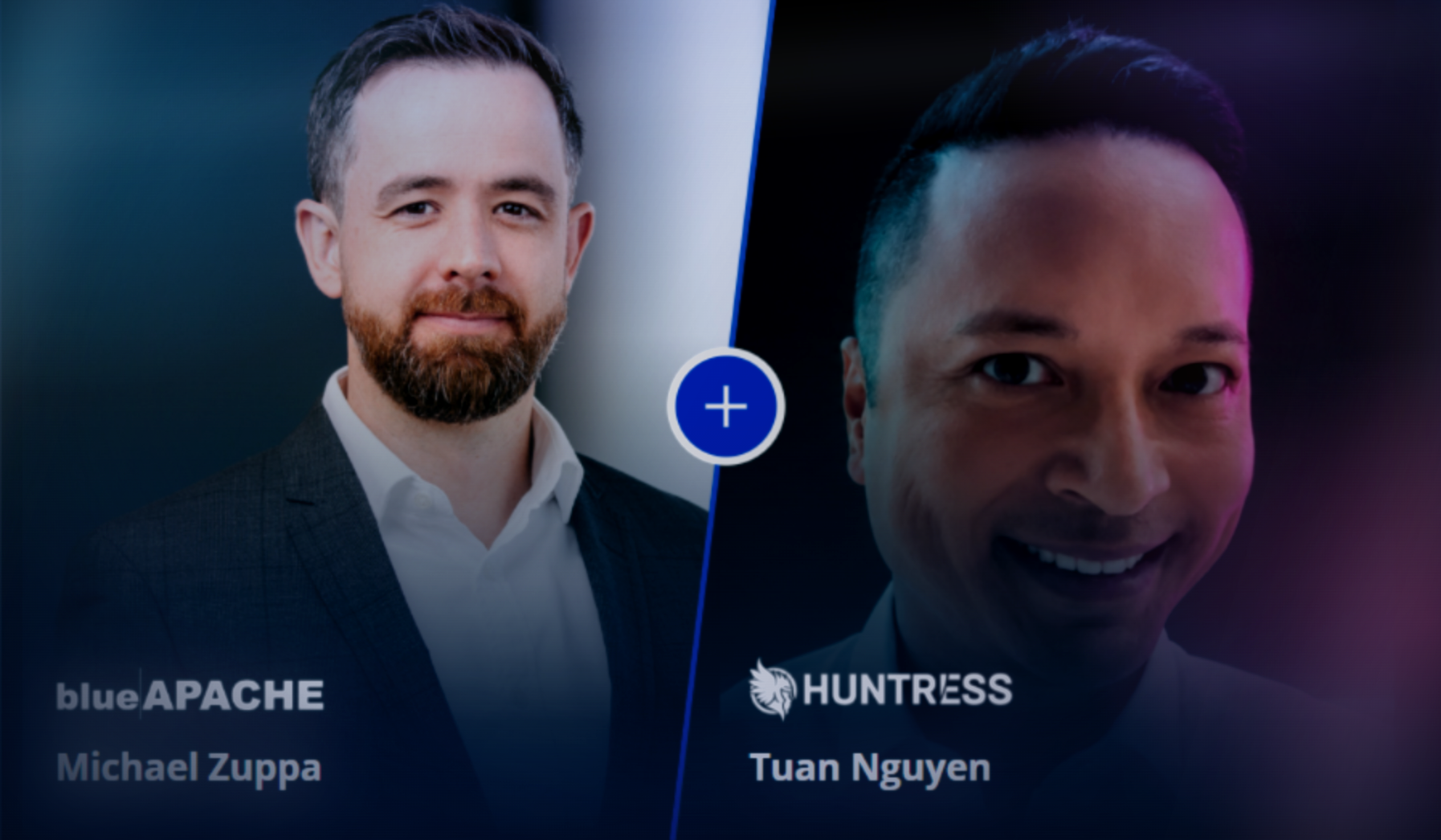
https://cdn.prod.website-files.com/6a70181278f802e23979d547/6a94ed426586d8f094e31f8a_cobrand_card_cinematic.png
blueAPACHE Expands Huntress Partnership to Accelerate Access to Enterprise-Grade Cybersecurity Across Australia
-
https://cdn.prod.website-files.com/6a70181278f802e23979d547/6a90d76875cc19d2f0222e6a_09_two_up_headshots_cinematic.avif
TechDay - blueAPACHE partners with ControlUp on managed services
-
https://cdn.prod.website-files.com/6a70181278f802e23979d547/6a8faffa0803d40169eebc40_01_executive_portrait_cinematic.avif
ARN - blueAPACHE takes services to the next level with ControlUp
-
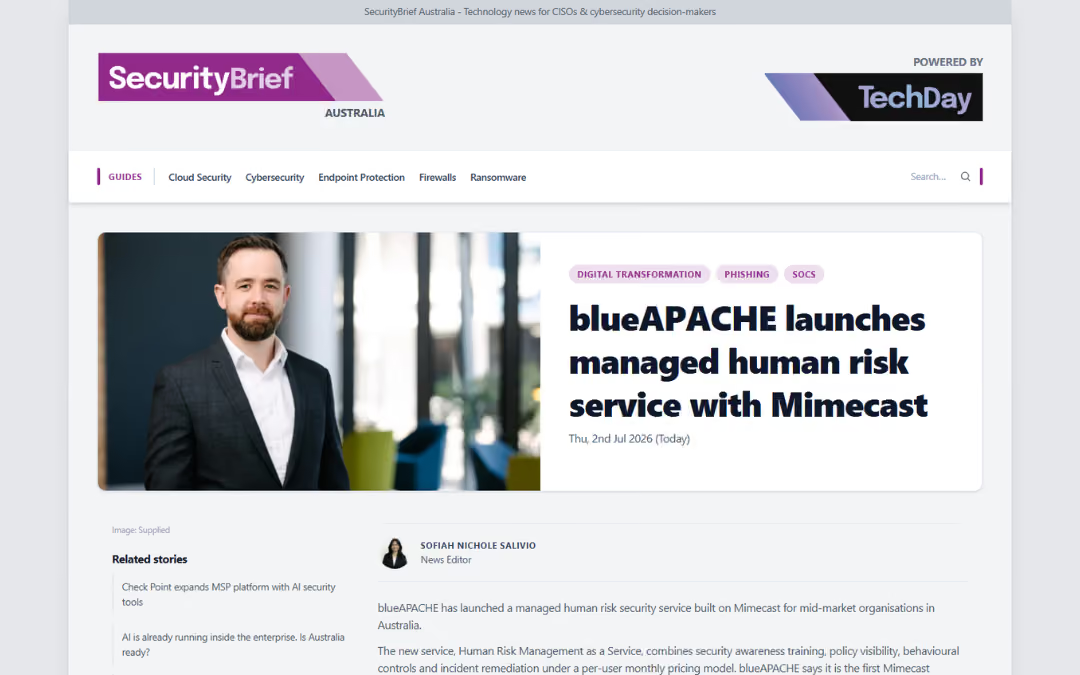
https://cdn.prod.website-files.com/6a70181278f802e23979d547/6a70216e4d727184e21771f5_Website-Blog-Banners-11.avif
blueAPACHE launches managed human risk service with Mimecast
-
https://cdn.prod.website-files.com/6a70181278f802e23979d547/6a702187c4df8435ad3b6b58_Website-Blog-Banners.avif
blueAPACHE Ranked on 2026 MSP 501 – Tech Industry’s Most Prestigious List of Global Managed Service Providers
-
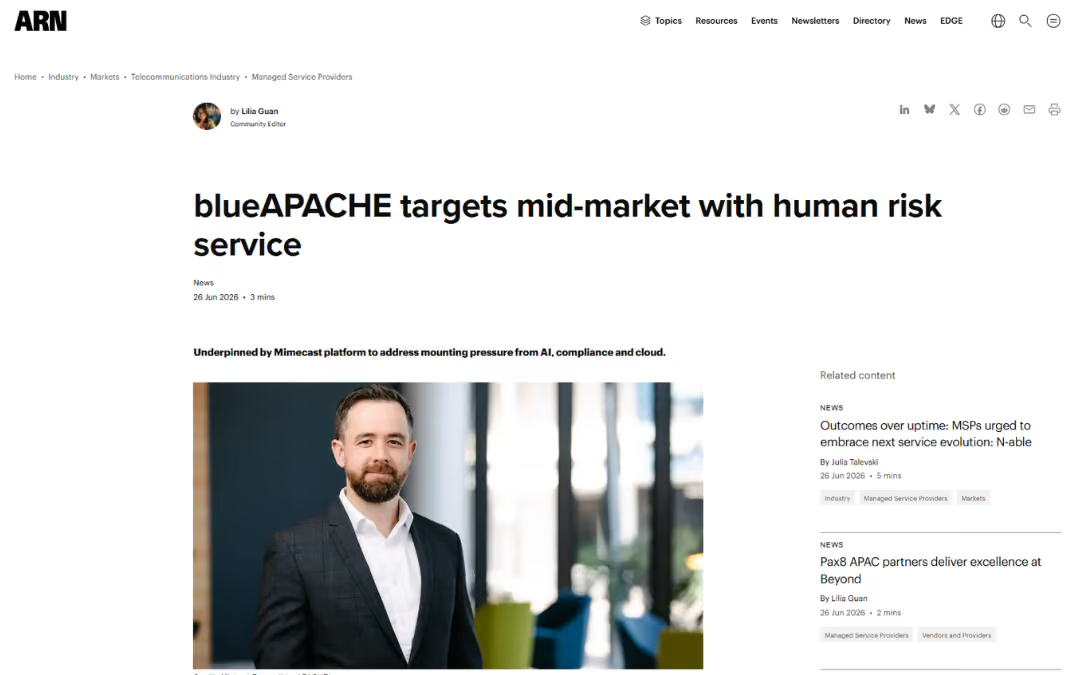
https://cdn.prod.website-files.com/6a70181278f802e23979d547/6a702187c4df8435ad3b6b53_Website-Blog-Banners-10.avif
blueAPACHE targets mid-market with human risk service
-
https://cdn.prod.website-files.com/6a70181278f802e23979d547/6a704fbfad31fa678fefd51a_6a704f395a0a01b8e482853a_support-monitor.svg
(no alt text)
-
https://cdn.prod.website-files.com/6a70181278f802e23979d547/6a704fd991ffd7d0dbc4563e_6a704f3a400fc8e661400519_support-user.svg
(no alt text)
-
https://cdn.prod.website-files.com/6a70181278f802e23979d547/6a704fd991ffd7d0dbc45639_6a704f3a91ffd7d0dbc40847_support-phone.svg
(no alt text)
-
https://cdn.prod.website-files.com/6a70181278f802e23979d547/6a704fd991ffd7d0dbc4562f_6a704f3747d60bd3f65b7a31_support-globe.svg
(no alt text)
-
https://cdn.prod.website-files.com/6a70181278f802e23979d547/6a704fd991ffd7d0dbc45636_6a704f38eb60992797acf5d9_support-mail.svg
(no alt text)
-
https://cdn.prod.website-files.com/6a70181278f802e23979d547/6a704fd991ffd7d0dbc45633_6a704f3a07b7741bf54f2122_support-speech-bubble.svg
(no alt text)
-
https://cdn.prod.website-files.com/6a6ffec7d87be5a881637bb3/6a707520ca872d1b5a69a518_Sensiba.avif
Sensiba ISO/IEC 27001 Certified badge with a diamond-shaped logo below the text.
-
https://www.facebook.com/tr?id=541021476571056&ev=PageView&noscript=1
(no alt text)