Top 5 trends from CES 2015
Summary
This blog post, "Top 5 trends from CES 2015", is a blueAPACHE article from 2015 covering security. CES 2015 was in full swing last week and all eyes were on Las Vegas to see the next big things in innovation. It is a huge event – 170,000 attendees and 3,600 exhibitors – brimming with start-ups, shiny bright lights and supersized TV screens. It is written for readers evaluating emPOWER Security. The underlying security practice it describes, reducing attack surface and improving detection and response, is not tied to a specific product version and remains relevant to any organisation managing cyber risk today.
Key facts
| Label | Value |
|---|---|
| Publication year | 2015 |
| Topic | Top 5 trends from CES 2015 |
| Services referenced | emPOWER Security |
| Named products or vendors |
Article
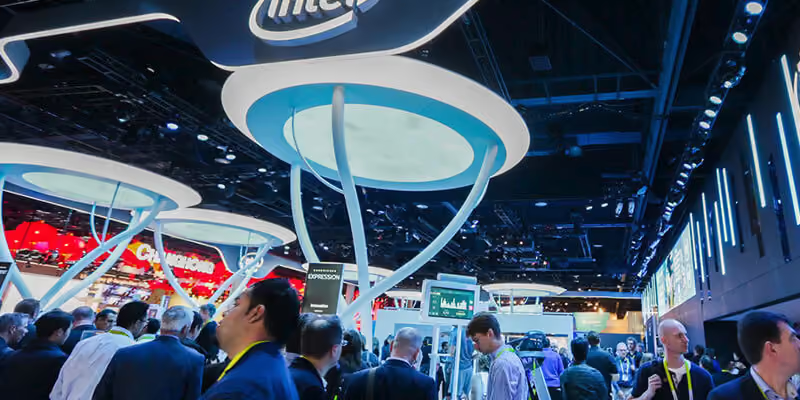
CES 2015 was in full swing last week and all eyes were on Las Vegas to see the next big things in innovation. It is a huge event – 170,000 attendees and 3,600 exhibitors – brimming with start-ups, shiny bright lights and supersized TV screens. This year, the theme was realisation. The technology that has been sprouted for years – the Internet of Things (IoT), wearables, advanced interfaces – have matured to a point where consumers can readily buy and use them. Amidst these, five key trends emerged:
1. People are the new security
2014 saw an unprecedented amount of data security breaches that compromised personal and banking information, and as a result, consumers are looking for new ways to secure their personal credential and protect their digital identity. In response, start-ups like Myris and HyprKey have developed authentication systems that utilize biometric measures to secure personal identification, using iris detection and fingerprint sensor, respectively. While current applications are mostly limited to unlocking computer passwords or mobile payment, these systems point to a future that allow secure, consistent identification everywhere. Myris, for instance, demoed its iris-scanning technology in a car visor, which would start the engine. Protecting anonymity is also important, making encryption important on the device itself. Vysk has developed a signal-blocking phone case that uses end-to-end encryption to ensure the privacy of phone conversations and file transfers. Although this may seem extreme, the interest shown at CES in the device indicates the level of concern about privacy.
2. Cars are the next mobile platform
Vehicles are now a BYOD (device) and BYOS (service) container to consume content. BMW and GoPro have taken this a step further by including an app that allows you to create content as well. Android vs iOS is rapidly becoming the new VHS vs Beta – Mercedes, Volvo, Jaguar and BMW have all committed to Apple, whilst the others are siding with Google’s Android Automotive alliance.
3. The smart home is here
The connected home is now a reality as product availability and compatibility are allowing automation and monitoring to happen anytime, anywhere, and with anything. Standards are the challenge as Apple’s HomeKit, Google’s Nest and Samsung’s SmartThings all battle it out. Consumer adoption is the focus, as manufacturers invest in educating customers on the differences and benefits. The Netatmo Welcome, for instance, identifies people in the home through facial recognition, and can alert users if an unrecognised face has entered. Old school appliances are also becoming smarter, with LG washing machines capable of doing two different loads at once, while Whirlpool’s new washers and dryers send maintenance alerts and provide information on how to fix common problems.
4. Television and content
Major manufacturers use CES to show off their biggest, thinnest, and curviest televisions, and this year was no exception: TCL featured a 110-inch TV, Sony unveiled a 0.2-inch thick TV, and Samsung showcased a 105-inch bendable screen. Image quality also continues to improve thanks to 4K, SUHD, HDR, and Quantum Dots. It is content delivery however, that continues to be of most interest to consumers.
5. Wearables become wearable
Wearables were big at last year’s CES, but were mostly limited to heart rate monitors and pedometers. This year, their applications have expanded to everything from fashion to gesture control. For example, Swarovski’s Shine band turns an activity tracker into a statement piece of jewellery, while the LogBar Ring lets the user control other devices, such as turning on lights or music. Even athletic wearables have surpassed expectations: Skulpt measures muscle quality and body fat percentage, and Owlet monitors infants’ vital signs to alert parents to any potential concerns.
Other notable highlights included advancements in virtual reality, wireless charging, drones and 3D printers. Drones can now auto-follow your mobile device, adding a huge array of content creation and tracking possibilities, while wireless charging is one area that is on our watch list for the coming year.
Related
Frequently asked questions
How large was CES 2015, according to this post?
The post says CES 2015 drew 170,000 attendees and 3,600 exhibitors.
What biometric authentication demos does the post describe under its 'People are the new security' trend?
The post describes Myris, which used iris detection and demoed its technology built into a car visor that could start the engine, and HyprKey, which used a fingerprint sensor, as start-ups showing biometric authentication at CES.
What does the post say Vysk's product does?
The post describes Vysk as having developed a signal-blocking phone case that uses end-to-end encryption to protect the privacy of phone conversations and file transfers.
Which car manufacturers had committed to Apple versus Google's Android Automotive alliance, per the post?
The post says Mercedes, Volvo, Jaguar and BMW had all committed to Apple, while other manufacturers were siding with Google's Android Automotive alliance.
What does the Netatmo Welcome device do, according to the post?
The post says the Netatmo Welcome identifies people in the home through facial recognition and can alert users if an unrecognised face has entered.
What television sizes and specs did manufacturers showcase at CES 2015, per the post?
The post says TCL featured a 110-inch TV, Sony unveiled a 0.2-inch thick TV, and Samsung showcased a 105-inch bendable screen.
What do the LogBar Ring and Swarovski's Shine band do, according to the post?
The post says the LogBar Ring lets the user control other devices, such as turning on lights or music, while Swarovski's Shine band turns an activity tracker into a piece of jewellery.
What health-monitoring wearables does the post mention, and what do they measure?
The post mentions Skulpt, which measures muscle quality and body fat percentage, and Owlet, which monitors infants' vital signs to alert parents to potential concerns.
Source
- origin post (2015)
Knowledge Base
What is the article 'Top 5 trends from CES 2015' about?
The article, published by blueAPACHE on January 23, 2015, summarizes the top 5 technology trends observed at CES 2015 in Las Vegas, an event that drew 170,000 attendees and 3,600 exhibitors, with a theme of 'realisation' as technologies like the Internet of Things, wearables, and advanced interfaces matured to consumer-ready products.
What was the first trend identified at CES 2015?
The first trend was 'People are the new security.' Following widespread 2014 data security breaches, consumers sought new ways to protect their digital identity. Start-ups like Myris and HyprKey developed biometric authentication systems using iris detection and fingerprint sensors, while Vysk developed a signal-blocking phone case with end-to-end encryption to protect phone conversations and file transfers.
How were cars becoming a new mobile platform according to the article?
The article describes cars as becoming a BYOD (bring your own device) and BYOS (bring your own service) container for consuming content, with BMW and GoPro including apps that allow content creation. It also notes a growing platform divide, with Mercedes, Volvo, Jaguar, and BMW committing to Apple, while others sided with Google's Android Automotive alliance.
What examples of smart home technology were highlighted at CES 2015?
The smart home trend featured companies like Apple (HomeKit), Google (Nest), and Samsung (SmartThings) competing on standards. Specific products mentioned included the Netatmo Welcome, which uses facial recognition to alert users of unrecognised faces in the home, LG washing machines capable of doing two loads at once, and Whirlpool washers/dryers that send maintenance alerts.
What television innovations were showcased at CES 2015?
Major manufacturers showed off their biggest, thinnest, and curviest TVs: TCL featured a 110-inch TV, Sony unveiled a 0.2-inch thick TV, and Samsung showcased a 105-inch bendable screen. Image quality improvements were also highlighted through 4K, SUHD, HDR, and Quantum Dot technologies, though content delivery remained of most interest to consumers.
How did wearable technology evolve at CES 2015 compared to the prior year?
While wearables at the 2014 CES were mostly limited to heart rate monitors and pedometers, at CES 2015 their applications expanded into fashion and gesture control. Examples included Swarovski's Shine band (an activity tracker doubling as jewellery), the LogBar Ring (which lets users control devices like lights or music), Skulpt (which measures muscle quality and body fat percentage), and Owlet (which monitors infants' vital signs).
What other notable technology highlights were mentioned besides the five main trends?
The article also noted advancements in virtual reality, wireless charging, drones, and 3D printers. It highlighted that drones could now auto-follow a mobile device, opening up content creation and tracking possibilities, and identified wireless charging as an area to watch in the coming year.
Who authored the CES 2015 trends article and when was it published?
The article was written by blueAPACHE and published on January 23, 2015, with a read time of about 4 minutes.
Images on This Page
-
https://cdn.prod.website-files.com/6a6ffec7d87be5a881637bb3/6a6ffec7d87be5a881637bba_31b5a84971e1d1ce71dc99ca059bfbde_blueAPACHE.svg
blueAPACHE logo on a dark blue background
-
https://cdn.prod.website-files.com/6a70181278f802e23979d547/6a701c0fddcde676dc9f324f_Top-5-trends-from-CES-2015.avif
(no alt text)
-
https://cdn.prod.website-files.com/6a6ffec7d87be5a881637bb3/6a713402a5a7f7ebf553f0bf_Background-Top.avif
(no alt text)
-
https://cdn.prod.website-files.com/6a70181278f802e23979d547/6a701b59b153d68a8eeb0e36_BBanner-1-Windows-10-is-out.-AI-is-in.-.avif
You’ve Invest in Security. So Why Are Breaches Still Happening?
-
https://cdn.prod.website-files.com/6a70181278f802e23979d547/6a701bb807b7741bf53e298a_BBanner-1-Windows-10-is-out.-AI-is-in.-8.avif
EOFY 2026: The Reset Is Done – Now It’s About Getting Ahead
-
https://cdn.prod.website-files.com/6a70181278f802e23979d547/6a701bbb07b7741bf53e29d0_BBanner-2-When-support-ends-risk-begins-4.avif
Why Every Business Needs AI Guardrails
-
https://cdn.prod.website-files.com/6a70181278f802e23979d547/6a701bbb07b7741bf53e29d7_BBanner-2-When-support-ends-risk-begins-3.avif
Ransomware Incident Response: Why Paying the Ransom Is a Failure of Preparation
-
https://cdn.prod.website-files.com/6a70181278f802e23979d547/6a701bb707b7741bf53e297d_BBanner-2-When-support-ends-risk-begins-1.avif
The 7 Cyber Truths Boards Must Act On In 2026
-
https://cdn.prod.website-files.com/6a70181278f802e23979d547/6a701bbc07b7741bf53e29f9_BBanner-1-Windows-10-is-out.-AI-is-in.-7.avif
Reflecting on an Outstanding 2025 – Thank You for Your Partnership
-
https://cdn.prod.website-files.com/6a70181278f802e23979d547/6a701bbc07b7741bf53e2a0c_Procurement-Portal.avif
The blueAPACHE e-Store: IT purchasing made simple
-
https://cdn.prod.website-files.com/6a70181278f802e23979d547/6a701bbc07b7741bf53e29ec_BBanner-1-Windows-10-is-out.-AI-is-in.-5.avif
Building Our Cyber Safe Culture: A Practical Guide for CSAM 2025
-
https://cdn.prod.website-files.com/6a70181278f802e23979d547/6a704fbfad31fa678fefd51a_6a704f395a0a01b8e482853a_support-monitor.svg
(no alt text)
-
https://cdn.prod.website-files.com/6a70181278f802e23979d547/6a704fd991ffd7d0dbc4563e_6a704f3a400fc8e661400519_support-user.svg
(no alt text)
-
https://cdn.prod.website-files.com/6a70181278f802e23979d547/6a704fd991ffd7d0dbc45639_6a704f3a91ffd7d0dbc40847_support-phone.svg
(no alt text)
-
https://cdn.prod.website-files.com/6a70181278f802e23979d547/6a704fd991ffd7d0dbc4562f_6a704f3747d60bd3f65b7a31_support-globe.svg
(no alt text)
-
https://cdn.prod.website-files.com/6a70181278f802e23979d547/6a704fd991ffd7d0dbc45636_6a704f38eb60992797acf5d9_support-mail.svg
(no alt text)
-
https://cdn.prod.website-files.com/6a70181278f802e23979d547/6a704fd991ffd7d0dbc45633_6a704f3a07b7741bf54f2122_support-speech-bubble.svg
(no alt text)
-
https://cdn.prod.website-files.com/6a6ffec7d87be5a881637bb3/6a707520ca872d1b5a69a518_Sensiba.avif
Sensiba ISO/IEC 27001 Certified badge with a diamond-shaped logo below the text.