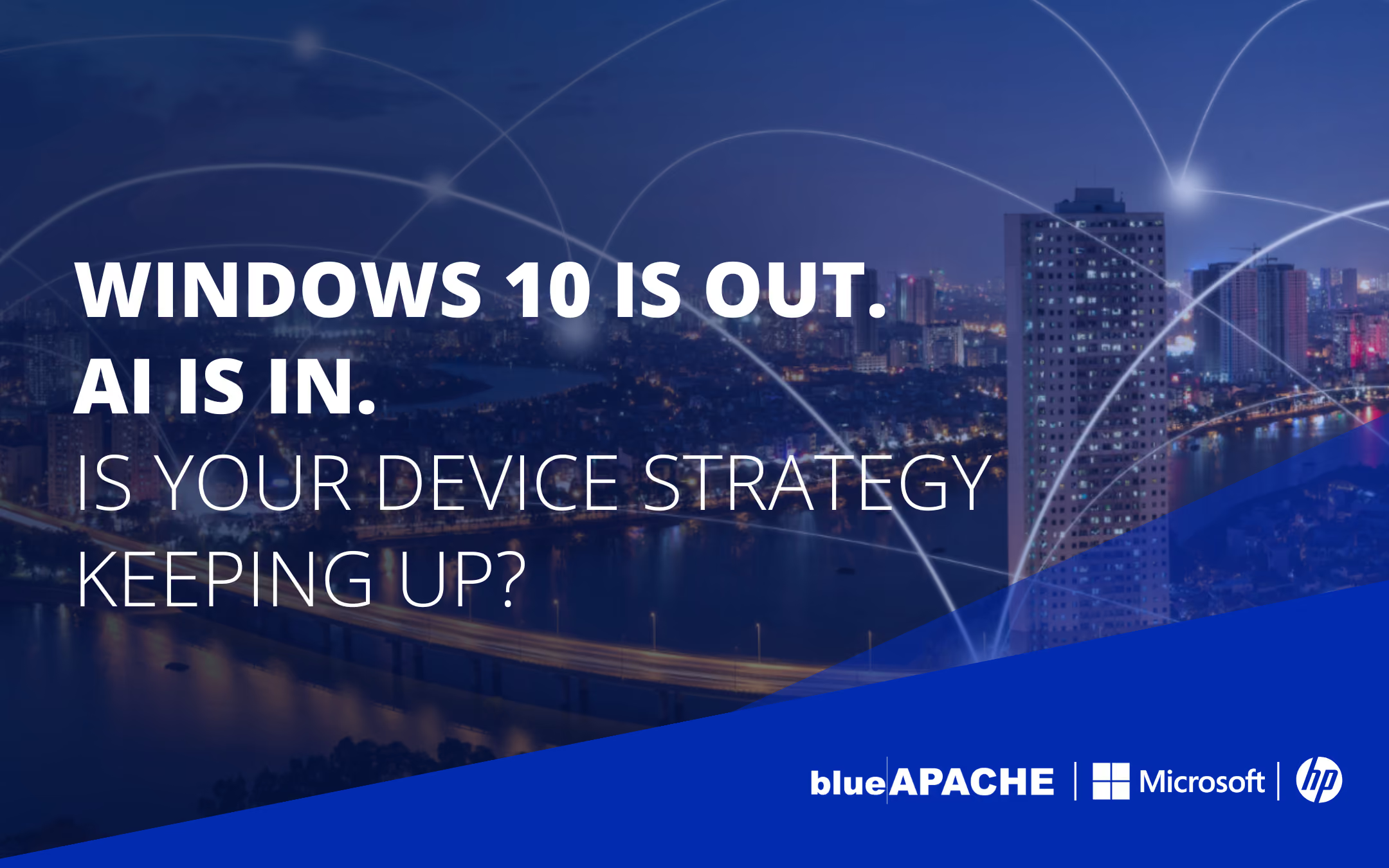
Windows 10 Is Out. AI Is In. Is Your Device Strategy Keeping Up?
Summary
This blueAPACHE post reports: By now, most organisations are well aware that Windows 10 support ends on October 14, 2025. The software might be reaching the end of life, but your device strategy doesn’t have to. It concerns Governance, Risk & Compliance, emPOWER Security, Microsoft Teams. It names Microsoft, Zoom in connection with the announcement. Published in 2025. Figures, product names and event details reflect that time; for current information see the linked service pages.
Key facts
| Label | Value |
|---|---|
| Publication year | 2025 |
| Services referenced | Governance, Risk & Compliance, emPOWER Security, Microsoft Teams |
| Named products or vendors | Microsoft, Zoom |
Article
By now, most organisations are well aware that Windows 10 support ends on October 14, 2025. The software might be reaching the end of life, but your device strategy doesn’t have to. This deadline isn’t just a prompt to upgrade. It’s an opportunity to rethink how your environment supports security, compliance, and sustainability. Once support ends, staying put could mean falling out of step with internal policies, risk thresholds, or audit expectations. And while awareness is widespread, action hasn’t caught up. What began as a straightforward technical refresh is now a broader test of IT readiness, operational visibility, and strategic alignment. Many businesses are still catching up. Procurement timelines have slipped. Rollout plans are behind. Internal alignment is harder than expected. But the deadline isn’t moving, and unsupported systems don’t sit still. Every device left on Windows 10 past October 14 brings growing compliance risk, security exposure, and unnecessary operational strain.
Stop Swapping. Start Strategising.
The conversation has shifted. It’s no longer just about replacing what’s outdated. It’s about what your next generation of devices needs to deliver. That means devices need to deliver not just reliable performance and manageability, but also support for AI-enabled tools, lower energy consumption, stronger security features, and a more strategic approach to lifecycle management.The expectations have changed, and the refresh decisions made now will have a direct impact on how effectively your environment supports users, security, and compliance moving forward. Governance and ESG requirements aren’t new, but they’re now squarely in focus. Stakeholders are asking not just how old devices are being replaced, but how they’re being retired. Are they being securely wiped? Recycled through certified partners? Donated to support digital inclusion? Or are they sitting in cupboards, unaccounted for and increasing your compliance risk? These are now standard questions in audits, board reports, and vendor assessments and your refresh strategy needs to be able to answer them.
Ready for AI or Just Hoping for the Best?
It’s clear that AI is no longer experimental or niche. Tools like Microsoft Copilot, Zoom AI Companion, and Adobe Firefly are becoming part of daily workflows, helping teams create faster, collaborate more effectively, and make informed decisions. But to realise their full potential, businesses need the right hardware to support them. Without purpose-built infrastructure, these tools can strain system resources, lead to inconsistent performance, and create unnecessary pressure on IT teams. That’s why many organisations are now turning to AI-ready devices, like the latest HP laptops powered by Intel Core Ultra processors. With dedicated AI engines, these devices run key workloads locally, reduce reliance on the cloud, and support a more secure and efficient way to scale AI across the organisation. The right device strategy doesn’t just enable today’s tools. It gives your teams the foundation to adopt what’s coming next with confidence.
The Deadline Isn’t Moving, But You Still Can
For organisations still finalising their transition plan, the opportunity is twofold. Yes, the first priority is to move off Windows 10 before support ends. But the smarter move is to use this moment to reset. Upgrade with a long-term lens. Choose devices that support your ESG goals. Invest in platforms that are ready for AI. And ensure your approach to lifecycle management is both compliant and measurable. At blueAPACHE, we’re working with organisations at every stage of this journey. Some are mid-rollout and need help accelerating. Others are still assessing their options. Whatever your starting point, we’re here to help you close the gap with confidence and clarity. From Windows 10 risk assessments to device strategy, from ESG-aligned retirement to AI-readiness planning, our team can support you with practical advice and delivery expertise. We’re currently offering a one-on-one consultation to help assess your Windows 10 exposure, prioritise actions across departments and locations, and explore what the next step should look like for your business. You’ll also go in the draw to win a premium HP EliteBook, because smart decisions should come with better tools. The deadline is real. But there is still time to make the transition work for you. Book your consultation today and refresh your fleet with purpose. Book Your Strategic Device Refresh Consultation.
Related
- Governance, Risk & Compliance
- emPOWER Security
- emPOWER Security (pillar)
- Microsoft Teams
- emPOWER Collaboration (pillar)
Frequently asked questions
What incentive does the article offer for booking a device strategy consultation?
The article offers a one-on-one consultation to assess Windows 10 exposure and prioritise actions, with entry into a draw to win a premium HP EliteBook for booking.
What AI-enabled tools does the article name as becoming part of daily workflows?
The article names Microsoft Copilot, Zoom AI Companion and Adobe Firefly as AI tools becoming part of daily workflows.
What hardware does the article recommend for AI readiness?
The article recommends AI-ready devices such as the latest HP laptops powered by Intel Core Ultra processors, which have dedicated AI engines to run key workloads locally.
What ESG-related questions does the article say are now standard in audits and board reports?
The article says audits, board reports and vendor assessments now routinely ask whether retired devices are being securely wiped, recycled through certified partners, donated to support digital inclusion, or left unaccounted for.
Is the information in this post still current?
No. It reports the Windows 10 End of Life deadline of 14 October 2025, which has now passed, and promotes a specific consultation offer; for blueAPACHE's current device strategy services, see the emPOWER Security pillar page rather than this post.
Source
https://www.blueapache.com/blog/windows10-out-ai-in-device-strategy/
Knowledge Base
When does Windows 10 support end?
Windows 10 support ends on October 14, 2025, according to the blueAPACHE article.
According to blueAPACHE, why is the Windows 10 end-of-support deadline more than just a technical upgrade prompt?
blueAPACHE frames it as an opportunity to rethink how an organisation's environment supports security, compliance, and sustainability, not just a straightforward technical refresh. It has become a broader test of IT readiness, operational visibility, and strategic alignment.
What risks does blueAPACHE say organisations face if devices remain on Windows 10 past the deadline?
Every device left on Windows 10 past October 14 brings growing compliance risk, security exposure, and unnecessary operational strain, and staying put could mean falling out of step with internal policies, risk thresholds, or audit expectations.
What questions are stakeholders now asking about device retirement as part of ESG scrutiny?
Stakeholders are asking not just how old devices are being replaced, but how they're being retired — whether they are securely wiped, recycled through certified partners, donated to support digital inclusion, or left sitting unaccounted for in cupboards, increasing compliance risk. These are now standard questions in audits, board reports, and vendor assessments.
What AI tools does the blueAPACHE article mention as becoming part of daily workflows?
The article mentions Microsoft Copilot, Zoom AI Companion, and Adobe Firefly as AI tools becoming part of daily workflows, helping teams create faster, collaborate more effectively, and make informed decisions.
What happens if AI tools run without purpose-built hardware infrastructure?
Without purpose-built infrastructure, AI tools can strain system resources, lead to inconsistent performance, and create unnecessary pressure on IT teams.
What kind of AI-ready devices does blueAPACHE recommend, and why?
blueAPACHE recommends AI-ready devices such as the latest HP laptops powered by Intel Core Ultra processors. With dedicated AI engines, these devices run key workloads locally, reduce reliance on the cloud, and support a more secure and efficient way to scale AI across the organisation.
What four elements should organisations focus on when resetting their device refresh strategy, per the article?
Organisations should upgrade with a long-term lens, choose devices that support ESG goals, invest in platforms that are ready for AI, and ensure their approach to lifecycle management is both compliant and measurable.
What consultation offer does blueAPACHE provide related to Windows 10 transition?
blueAPACHE is offering a one-on-one consultation to help assess Windows 10 exposure, prioritise actions across departments and locations, and explore next steps for the business. Participants also go in the draw to win a premium HP EliteBook.
What services can blueAPACHE support organisations with regarding this transition?
blueAPACHE can support organisations with Windows 10 risk assessments, device strategy, ESG-aligned retirement, and AI-readiness planning, offering practical advice and delivery expertise at whatever stage of the journey they are in.
How does Microsoft Intune relate to AI-ready device strategy according to the knowledge base?
Microsoft Intune, deployed through blueAPACHE's emPOWER Managed Services, delivers zero-touch hardware provisioning that automates device onboarding, removing manual bottlenecks and standardizing desktop experiences across distributed workforces as part of modern AI-ready device management.
What role does identity infrastructure play in blueAPACHE's approach to AI-integrated environments?
According to the knowledge base, AI-integrated environments depend critically on resilient identity infrastructure, with Microsoft Entra ID serving as the foundational identity platform for such environments.
Images on This Page
-
https://cdn.prod.website-files.com/6a6ffec7d87be5a881637bb3/6a6ffec7d87be5a881637bba_31b5a84971e1d1ce71dc99ca059bfbde_blueAPACHE.svg
blueAPACHE logo on a dark blue background
-
https://cdn.prod.website-files.com/6a70181278f802e23979d547/6a701bbd07b7741bf53e2a41_BBanner-1_-Windows-10-is-out.-AI-is-in-1.avif
(no alt text)
-
https://cdn.prod.website-files.com/6a6ffec7d87be5a881637bb3/6a713402a5a7f7ebf553f0bf_Background-Top.avif
(no alt text)
-
https://cdn.prod.website-files.com/6a6ffec7d87be5a881637bb3/6a6ffec7d87be5a881637bbc_Webflow%20-%20Directory%20Cover%20Image.svg
(no alt text)
-
https://cdn.prod.website-files.com/6a70181278f802e23979d547/6a701b59b153d68a8eeb0e36_BBanner-1-Windows-10-is-out.-AI-is-in.-.avif
You’ve Invest in Security. So Why Are Breaches Still Happening?
-
https://cdn.prod.website-files.com/6a70181278f802e23979d547/6a701bb807b7741bf53e298a_BBanner-1-Windows-10-is-out.-AI-is-in.-8.avif
EOFY 2026: The Reset Is Done – Now It’s About Getting Ahead
-
https://cdn.prod.website-files.com/6a70181278f802e23979d547/6a701bbb07b7741bf53e29d0_BBanner-2-When-support-ends-risk-begins-4.avif
Why Every Business Needs AI Guardrails
-
https://cdn.prod.website-files.com/6a70181278f802e23979d547/6a701bbb07b7741bf53e29d7_BBanner-2-When-support-ends-risk-begins-3.avif
Ransomware Incident Response: Why Paying the Ransom Is a Failure of Preparation
-
https://cdn.prod.website-files.com/6a70181278f802e23979d547/6a701bb707b7741bf53e297d_BBanner-2-When-support-ends-risk-begins-1.avif
The 7 Cyber Truths Boards Must Act On In 2026
-
https://cdn.prod.website-files.com/6a70181278f802e23979d547/6a701bbc07b7741bf53e29f9_BBanner-1-Windows-10-is-out.-AI-is-in.-7.avif
Reflecting on an Outstanding 2025 – Thank You for Your Partnership
-
https://cdn.prod.website-files.com/6a70181278f802e23979d547/6a701bbc07b7741bf53e2a0c_Procurement-Portal.avif
The blueAPACHE e-Store: IT purchasing made simple
-
https://cdn.prod.website-files.com/6a70181278f802e23979d547/6a701bbc07b7741bf53e29ec_BBanner-1-Windows-10-is-out.-AI-is-in.-5.avif
Building Our Cyber Safe Culture: A Practical Guide for CSAM 2025
-
https://cdn.prod.website-files.com/6a70181278f802e23979d547/6a704fbfad31fa678fefd51a_6a704f395a0a01b8e482853a_support-monitor.svg
(no alt text)
-
https://cdn.prod.website-files.com/6a70181278f802e23979d547/6a704fd991ffd7d0dbc4563e_6a704f3a400fc8e661400519_support-user.svg
(no alt text)
-
https://cdn.prod.website-files.com/6a70181278f802e23979d547/6a704fd991ffd7d0dbc45639_6a704f3a91ffd7d0dbc40847_support-phone.svg
(no alt text)
-
https://cdn.prod.website-files.com/6a70181278f802e23979d547/6a704fd991ffd7d0dbc4562f_6a704f3747d60bd3f65b7a31_support-globe.svg
(no alt text)
-
https://cdn.prod.website-files.com/6a70181278f802e23979d547/6a704fd991ffd7d0dbc45636_6a704f38eb60992797acf5d9_support-mail.svg
(no alt text)
-
https://cdn.prod.website-files.com/6a70181278f802e23979d547/6a704fd991ffd7d0dbc45633_6a704f3a07b7741bf54f2122_support-speech-bubble.svg
(no alt text)
-
https://cdn.prod.website-files.com/6a6ffec7d87be5a881637bb3/6a707520ca872d1b5a69a518_Sensiba.avif
Sensiba ISO/IEC 27001 Certified badge with a diamond-shaped logo below the text.
-
https://www.facebook.com/tr?id=541021476571056&ev=PageView&noscript=1
(no alt text)