Work used to be a place. Not anymore.
Summary
This blog post, "Work used to be a place. Not anymore.", is a blueAPACHE article from 2019 covering security. Today, work is an increasingly dynamic activity that people expect to be as adaptable as they are. We’ve traded in the traditional cubicles and desktops for virtual meetings and mobile devices. It is written for readers evaluating emPOWER Cloud, Microsoft Teams. The underlying security practice it describes, reducing attack surface and improving detection and response, is not tied to a specific product version and remains relevant to any organisation managing cyber risk today.
Key facts
| Label | Value |
|---|---|
| Publication year | 2019 |
| Topic | Work used to be a place. Not anymore. |
| Services referenced | emPOWER Cloud, Microsoft Teams, emPOWER Core Network & DC Interconnect |
| Named products or vendors | Windows |
Article
Today, work is an increasingly dynamic activity that people expect to be as adaptable as they are. We’ve traded in the traditional cubicles and desktops for virtual meetings and mobile devices. It’s no secret, the center of work is shifting to the cloud. But as an organisation, managing the growing proliferation of apps scattered across clouds and data centers is unwieldy, increases your security risks, and puts a strain on productivity. But that’s nothing compared to the constant struggle of managing changing user expectations. To deliver the seamless experience your employees expect today and every day, IT must develop an evolved approach that allows for not only robust visibility, but also better control of networks, services, and diverse apps and devices. Unfortunately, as many IT teams have already realised, your traditional workspaces are working against you. Apps and data are spread across various data centers and clouds. SaaS apps are increasing in popularity. And the broad spectrum of devices that employees are using daily just continues to grow. That’s causing many employees to resent—or even avoid—those approved workspaces that IT has built over time and are trusted to be secure. The reasons why are straightforward. Here’s a few:
- Too many user credentials – With multiple applications come multiple sign-in credentials, interrupted workflows, and stifled productivity. With so many user names and passwords to remember, bad password habits proliferate, and employees get frustrated.
- Inconsistent user experiences – Cloud applications are often optimised for different browsers, devices, or operating systems, leaving employees with disparate user experiences. And with little to no oversight capabilities, IT teams can’t solve for a variety of issues.
- Fragmented workflows – With employees managing multiple processes in different applications, workflows are fragmented, and processes are often redundant. For example, Finance might use one application for expenses and another for reimbursements—but without a process and workflow to keep the two in sync.
- App and data limitations – When employees are limited to apps native to their device, whether mobile, Windows, or SaaS, they lack the flexibility to work how, when, and where they need to. The same is true of data—employees can’t be productive when they’re unable to access, edit, sync, and share files across devices and apps.
So what is IT supposed to do? Consider a secure, digital workspace where you can manage everything in your environment—endpoints, apps, identities, analytics, infrastructure and more. It can greatly simplify the IT complexities you deal with daily while also enabling you to
- Deliver the apps and data people need to be productive
- Improve performance with unified analytics
- Unify access to apps across hybrid environments
To see how a secure digital workspace can simplify IT while driving user productivity to new heights, contact us today.
Related
- emPOWER Cloud
- emPOWER Cloud (pillar hub)
- Microsoft Teams
- emPOWER Collaboration (pillar hub)
- emPOWER Core Network & DC Interconnect
- emPOWER Connectivity (pillar hub)
Frequently asked questions
What four problems does the article list as reasons employees resent traditional IT-built workspaces?
The article lists too many user credentials, inconsistent user experiences, fragmented workflows, and app and data limitations. It presents these as the straightforward reasons why employees resent, or even avoid, the approved workspaces IT has built to be secure.
What does the article say happens when employees have too many user credentials to manage?
The article says that with multiple applications come multiple sign-in credentials, interrupted workflows and stifled productivity. It adds that with so many usernames and passwords to remember, bad password habits proliferate and employees get frustrated.
How does the article describe the impact of inconsistent cloud application experiences?
The article says cloud applications are often optimised for different browsers, devices or operating systems, leaving employees with disparate user experiences. It notes that with little to no oversight capability, IT teams cannot solve for this variety of issues.
What example does the article give of a fragmented workflow?
The article gives the example of Finance using one application for expenses and another for reimbursements, without a process or workflow to keep the two in sync. It uses this to illustrate how employees managing multiple processes in different applications end up with redundant, disconnected work.
What three things does the article say a secure digital workspace should enable IT to do?
The article says a secure digital workspace should let IT deliver the apps and data people need to be productive, improve performance with unified analytics, and unify access to apps across hybrid environments. It presents these three capabilities as the payoff for consolidating endpoints, apps, identities, analytics and infrastructure into one managed environment.
What shift does the article say is happening to where work is centred?
The article says the centre of work is shifting to the cloud, with traditional cubicles and desktops traded in for virtual meetings and mobile devices. It frames this shift as the reason traditional, siloed workspace approaches are now working against IT teams rather than for them.
What app and data limitation does the article say employees face?
The article says that when employees are limited to apps native to their own device, whether mobile, Windows or SaaS, they lack the flexibility to work how, when and where they need to. It adds that the same limitation applies to data, since employees cannot be productive if they cannot access, edit, sync and share files across devices and apps.
What does the article invite a reader to do to see how a secure digital workspace could help?
The article invites readers to contact blueAPACHE to see how a secure digital workspace can simplify IT while driving user productivity. It does not describe a self-service trial or demo within the post itself.
Source
- origin post (2019)
Knowledge Base
What is the main theme of the blueAPACHE blog post 'Work used to be a place. Not anymore.'?
The post discusses how work has shifted from being tied to a physical location to being a dynamic activity centered on the cloud, with employees expecting adaptable, mobile experiences instead of traditional cubicles and desktops.
Who wrote the blog post and when was it published?
The blog post was written by blueAPACHE and published on September 27, 2019.
How long does it take to read the blog post?
The blog post has a read time of 3 minutes.
According to the article, what challenges do traditional workspaces create for IT teams?
The article states that apps and data are spread across various data centers and clouds, SaaS apps are increasing in popularity, and the growing variety of employee devices causes many employees to resent or avoid the approved workspaces IT has built, even though those workspaces are trusted to be secure.
What are the four reasons the article gives for employees resenting IT-approved workspaces?
The article lists: too many user credentials (multiple sign-in credentials causing interrupted workflows and bad password habits), inconsistent user experiences (cloud apps optimized differently across browsers, devices, or operating systems), fragmented workflows (multiple processes in different applications with no synced workflow), and app and data limitations (employees restricted to apps native to their device, limiting flexibility to access, edit, sync, and share files).
What solution does the article recommend for IT teams dealing with these workspace challenges?
The article recommends considering a secure, digital workspace that lets IT manage everything in the environment—endpoints, apps, identities, analytics, infrastructure, and more—to simplify IT complexities while delivering the apps and data people need, improving performance with unified analytics, and unifying access to apps across hybrid environments.
What does the article suggest a secure digital workspace can help IT teams achieve?
It can help IT teams deliver the apps and data people need to be productive, improve performance with unified analytics, and unify access to apps across hybrid environments.
How can someone learn more about implementing a secure digital workspace after reading this blog post?
The article invites readers to contact blueAPACHE via the '/contact/' link to see how a secure digital workspace can simplify IT while driving user productivity to new heights.
Images on This Page
-
https://cdn.prod.website-files.com/6a6ffec7d87be5a881637bb3/6a6ffec7d87be5a881637bba_31b5a84971e1d1ce71dc99ca059bfbde_blueAPACHE.svg
blueAPACHE logo on a dark blue background
-
https://cdn.prod.website-files.com/6a70181278f802e23979d547/6a701bcd07b7741bf53e2f2d_GettyImages-1148394694.avif
(no alt text)
-
https://cdn.prod.website-files.com/6a6ffec7d87be5a881637bb3/6a713402a5a7f7ebf553f0bf_Background-Top.avif
(no alt text)
-
https://cdn.prod.website-files.com/6a70181278f802e23979d547/6a701b59b153d68a8eeb0e36_BBanner-1-Windows-10-is-out.-AI-is-in.-.avif
You’ve Invest in Security. So Why Are Breaches Still Happening?
-
https://cdn.prod.website-files.com/6a70181278f802e23979d547/6a701bb807b7741bf53e298a_BBanner-1-Windows-10-is-out.-AI-is-in.-8.avif
EOFY 2026: The Reset Is Done – Now It’s About Getting Ahead
-
https://cdn.prod.website-files.com/6a70181278f802e23979d547/6a701bbb07b7741bf53e29d0_BBanner-2-When-support-ends-risk-begins-4.avif
Why Every Business Needs AI Guardrails
-
https://cdn.prod.website-files.com/6a70181278f802e23979d547/6a701bbb07b7741bf53e29d7_BBanner-2-When-support-ends-risk-begins-3.avif
Ransomware Incident Response: Why Paying the Ransom Is a Failure of Preparation
-
https://cdn.prod.website-files.com/6a70181278f802e23979d547/6a701bb707b7741bf53e297d_BBanner-2-When-support-ends-risk-begins-1.avif
The 7 Cyber Truths Boards Must Act On In 2026
-
https://cdn.prod.website-files.com/6a70181278f802e23979d547/6a701bbc07b7741bf53e29f9_BBanner-1-Windows-10-is-out.-AI-is-in.-7.avif
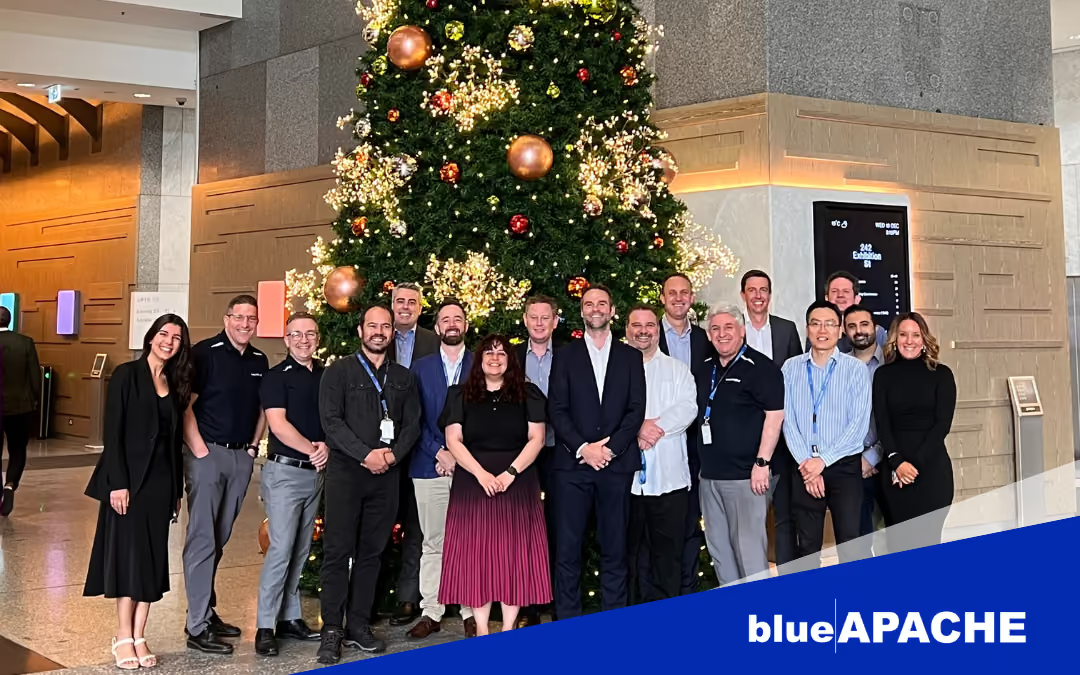
Reflecting on an Outstanding 2025 – Thank You for Your Partnership
-
https://cdn.prod.website-files.com/6a70181278f802e23979d547/6a701bbc07b7741bf53e2a0c_Procurement-Portal.avif
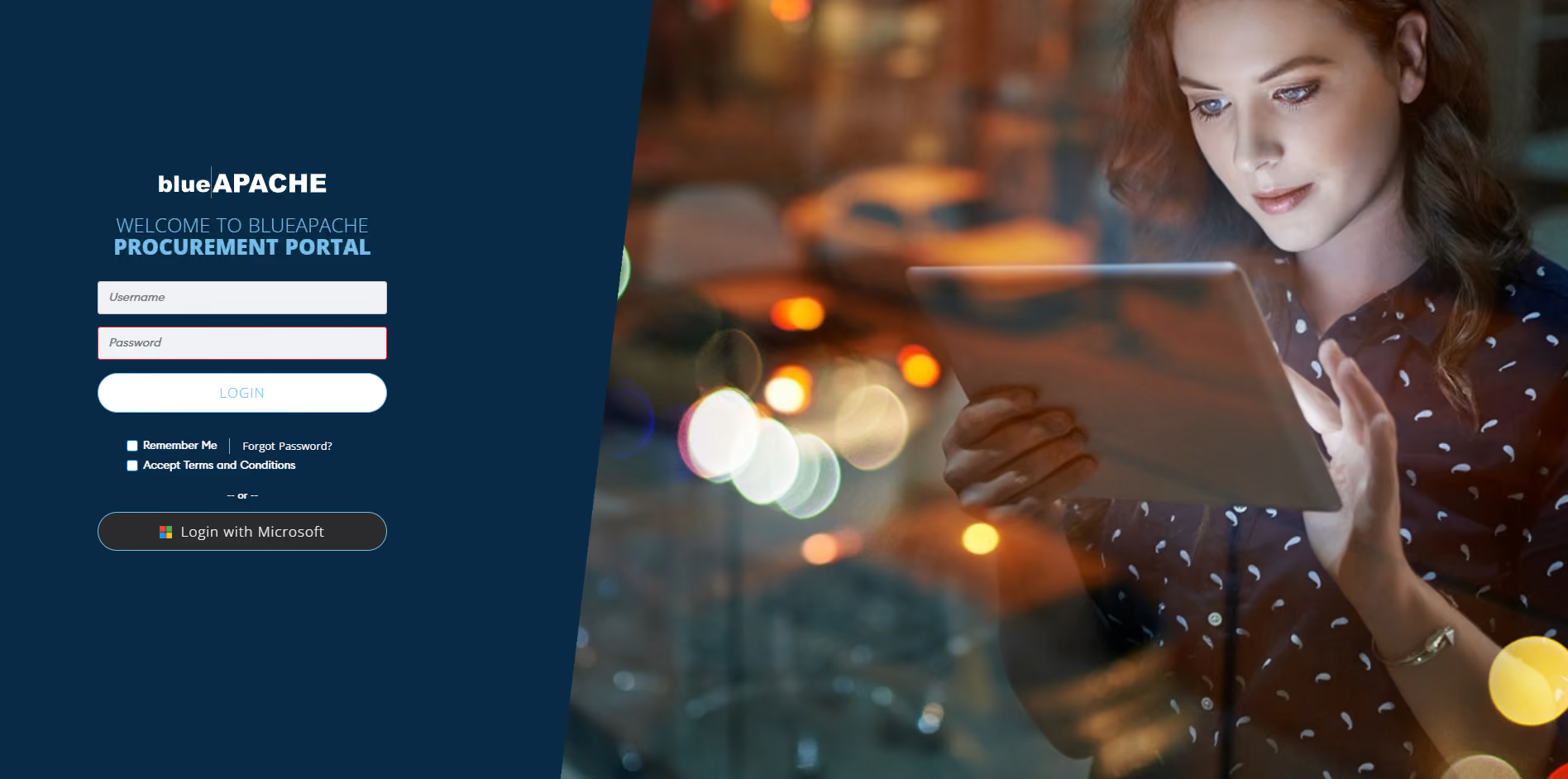
The blueAPACHE e-Store: IT purchasing made simple
-
https://cdn.prod.website-files.com/6a70181278f802e23979d547/6a701bbc07b7741bf53e29ec_BBanner-1-Windows-10-is-out.-AI-is-in.-5.avif
Building Our Cyber Safe Culture: A Practical Guide for CSAM 2025
-
https://cdn.prod.website-files.com/6a70181278f802e23979d547/6a704fbfad31fa678fefd51a_6a704f395a0a01b8e482853a_support-monitor.svg
(no alt text)
-
https://cdn.prod.website-files.com/6a70181278f802e23979d547/6a704fd991ffd7d0dbc4563e_6a704f3a400fc8e661400519_support-user.svg
(no alt text)
-
https://cdn.prod.website-files.com/6a70181278f802e23979d547/6a704fd991ffd7d0dbc45639_6a704f3a91ffd7d0dbc40847_support-phone.svg
(no alt text)
-
https://cdn.prod.website-files.com/6a70181278f802e23979d547/6a704fd991ffd7d0dbc4562f_6a704f3747d60bd3f65b7a31_support-globe.svg
(no alt text)
-
https://cdn.prod.website-files.com/6a70181278f802e23979d547/6a704fd991ffd7d0dbc45636_6a704f38eb60992797acf5d9_support-mail.svg
(no alt text)
-
https://cdn.prod.website-files.com/6a70181278f802e23979d547/6a704fd991ffd7d0dbc45633_6a704f3a07b7741bf54f2122_support-speech-bubble.svg
(no alt text)
-
https://cdn.prod.website-files.com/6a6ffec7d87be5a881637bb3/6a707520ca872d1b5a69a518_Sensiba.avif
Sensiba ISO/IEC 27001 Certified badge with a diamond-shaped logo below the text.
-
https://www.facebook.com/tr?id=541021476571056&ev=PageView&noscript=1
(no alt text)